K-food has changed how the world eats. Now CJ Foods is building the platform to complete that table — with Korean spirits
At a Glance
- K-Food as a Dining Culture: Korean food has evolved from a menu trend into a full dining experience — and what you drink is becoming an increasingly important part of that experience.
- The Right Moment for Korean Spirits: Growing consumer interest in origin-driven, story-led spirits is creating new opportunities for Korean distilleries on the global stage.
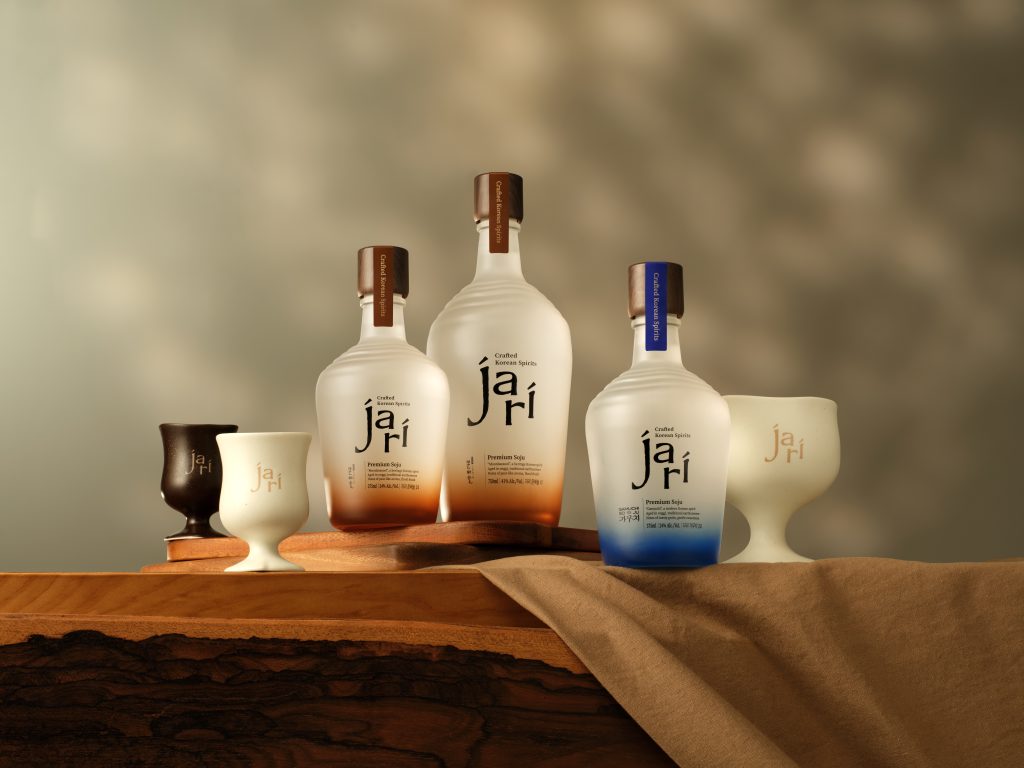
- jari as a Brand and Platform: Through jari, CJ Foods is preparing to introduce aged Korean distilled spirits by selecting high-quality base spirits from partner distilleries and aging them under the jari brand, while building a platform that connects distilleries, chefs, bartenders and global dining audiences through pairing, mixology and collaboration.
Where K-Food Meets the Next Chapter
K-food has moved well beyond individual dishes and passing trends. In New York alone, Korean restaurants now hold 12 Michelin stars — a milestone that signals how deeply Korean cuisine has become part of the world’s most competitive fine dining markets.
As familiarity with Korean food deepens, interest is expanding beyond what is served on the plate. Diners are increasingly curious about the Korean dining experience — how dishes are shared, what accompanies them and the atmosphere that brings everything together. As K-food continues to evolve into a broader K-lifestyle experience, CJ Foods is looking at what comes next.
Through jari, CJ Foods aims to bring Korean spirits into that conversation. The name jari carries meaning in Korean: it refers to a seat or a gathering place — the space where people come together, often over a shared drink. That meaning reflects where jari’s spirits come from: a depth shaped by Korea’s diverse base spirits and by a drinking culture built on connection between people. It speaks to CJ Foods’s ambition to share the values held in Korean drinking culture with the world — creating a place for Korean spirits at the global table. jari is designed as a platform for that shift — connecting Korean spirits to the people and places shaping how the world dines.
K-Food Is Becoming a Dining Occasion
K-food has moved from trend to culture. Korean barbecue, bibimbap and tteokbokki have become reference points in global food media. And increasingly, the interest is not stopping at the food itself.
For a growing number of global diners, Korean dining is no longer just about the food on the plate — it is about how the meal is structured, how it is shared and what the full experience is meant to feel like. Korean dining has a distinct rhythm: multiple dishes arriving together, banchan (small shared side dishes) refreshed throughout the meal, flavors that shift between spicy, savory, fermented and fresh. It is a format built for the table, not the plate.
In dining cultures that have made this kind of leap globally — Italian, Japanese, Mexican among them — drinks have played a defining role. They give the meal a beginning and an end. They offer a counterpoint to the food. They signal that a cuisine has arrived not just as something to eat, but as something to experience. Korean dining is at that inflection point. The question is what completes the table.
That is where Korean spirits have an opportunity to become part of the experience.
Why Korean Spirits Fit the Moment
The global spirits market is also creating conditions where Korean spirits can find real footing. Consumers are showing growing interest not only in mass-produced options, but in spirits defined by their origin, ingredients, production methods and the stories behind their makers. This shift — toward what might be called a premium, provenance-driven drinking culture — is visible in the sustained growth of the premium spirits segment: the global premium spirits market is projected to expand from approximately USD 237.08 billion in 2026 to USD 388.48 billion by 2034, growing at an annual rate of 6.37% (Fortune Business Insights, 2026).
Korean spirits connect naturally to this shift. They are shaped by regional identity, distinctive fermentation and distillation traditions, specific raw materials rooted in Korean agriculture and the stories of the distilleries that make them. They are also, by nature, designed to be enjoyed with food — a quality that gives them relevance in a global dining scene where interest in food and drink pairing continues to grow.
Even as the conditions align, Korean spirits still need a platform to translate them into experiences that global dining audiences can access and understand.
The Missing Link: From Korean Distilleries to Dining Experiences
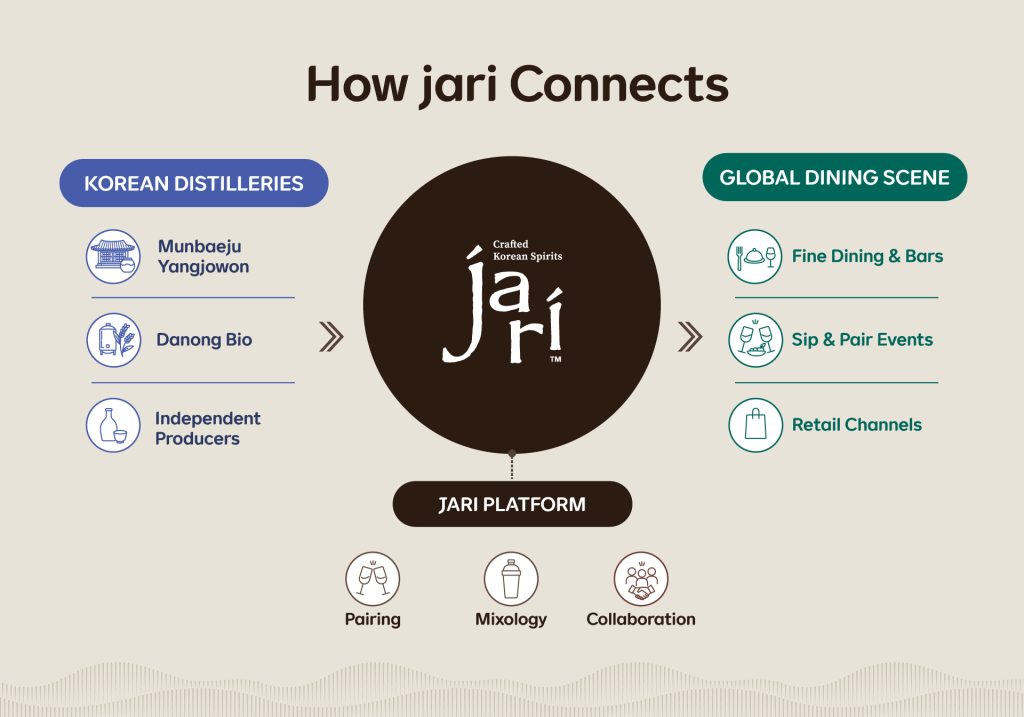
The brand serves as a platform, creating jari’s own aged Korean spirits from carefully selected base spirits while connecting Korean distilleries to the global dining scene. By bringing together distilleries, chefs and bartenders, jari seeks to make Korean spirits a natural part of how Korean dining culture is experienced around the world.
jari approaches this challenge on two levels.
The first is product. jari is preparing to introduce its own line of aged Korean spirits, crafted from carefully selected base spirits and matured under the jari brand. These are not simply sourced and resold — they are products shaped by jari’s vision of what Korean spirits can contribute to a global dining context, refined through jari’s own aging philosophy while building on the craftsmanship of Korea’s leading distilleries.
The second is access. Korea is home to spirits distilleries with genuine competitive strengths — distinctive raw materials, time-honored production methods and compelling stories rooted in place and tradition. But entering global markets on their own presents real challenges. It takes the ability to communicate in a language global audiences understand, to position products appropriately across restaurant, bar and retail channels, and to develop cocktail recipes and food pairings that make the experience feel accessible. It also requires building real relationships with the chefs, bartenders, restaurants and bars that shape how consumers encounter new flavors.
Working with distilleries such as Moonbaesool Brewery — a distillery designated as a Korean National Intangible Cultural Heritage, carrying forward centuries of traditional distillation practice — and Danong Bio — an independently operated distillery recognized for its proprietary fermentation technology — jari aims to connect Korean spirits with genuine origin stories to dining contexts that global consumers can relate to.
Looking ahead, jari plans to expand its reach into restaurants, bars and retail channels as part of its broader distribution strategy.
With the platform in place, the focus shifts to how jari brings those experiences to life for consumers.
How jari Designs the Experience
jari does not rely on tradition or product descriptions alone to introduce Korean spirits to the world. Instead, it designs experiences that allow consumers to encounter Korean spirits naturally within real dining contexts. The approach rests on three pillars.
Pairing — creating food and spirits pairings that naturally bring Korean spirits into the Korean dining experience.
Mixology — developing cocktail recipes that offer accessible entry points for consumers who may be encountering Korean spirits for the first time.
Collaboration — partnering with chefs, bartenders, restaurants and bars to create authentic Korean spirits experiences for consumers.
jari’s “The Korean Table — Sip & Pair by jari” event in New York offered an early illustration of this approach. Held at Korean dining destinations Hojokban and Nari in Manhattan, the event brought together Hong Duui — owner-bartender of Pine & Co. and winner of World Class Korea — as the brand’s ambassador. Drawing on Korean spirits from domestic small-batch distilleries, Hong crafted six cocktails designed to pair naturally with Korean dishes such as yukhoe tartare (Korean beef tartare) and pajeon (Korean savory pancake). The event introduced jari’s vision of Korean spirits as a dining companion to consumers, generating encouraging early responses to the pairing experience.
At THE CJ CUP in Texas, jari brought K-spirits cocktails crafted from Korean spirits to attendees at one of golf’s most prominent global events. Blending Korean spirits with cocktail formats familiar to international audiences, jari presented four signature serves — introducing the flavor profiles of Korean spirits in an approachable, celebratory setting and demonstrating how Korean spirits can naturally complement a wide range of social occasions beyond the dining table.

Building the Next Layer of Korean Dining
jari launched in Korea on July 20, 2026, with a U.S.-focused rollout planned for mid-September 2026. It marks the first full-scale stage for the Korean spirits platform CJ Foods has been building — and the beginning of a longer effort to bring Korean spirits into the dining experiences of consumers around the world.
With jari, CJ Foods aims to help Korean spirits become a natural part of global dining culture, creating new ways for consumers to experience Korean culture at the table. The goal is to connect Korean distilleries, chefs, bartenders and global consumers through a growing ecosystem where Korean spirits can find their place. At its core, jari is built for people who treasure time spent together — designed to feel just as natural at a celebratory dinner as among friends on an ordinary evening. As a CJ Foods representative put it: “Just as cheese and pasta are enjoyed with wine, we hope to spread a culture where Korean food and Korean spirits are enjoyed together naturally — a Korean culture of pairing.” The ambition is not simply to introduce another spirits brand. It is to help Korean spirits become a natural part of dining experiences around the world.