This summary was generated with AI. We recommend reading the full article for accurate information.
From K-pop and food to beauty and fandoms, a UCLA professor explains the cultural shifts shaping how young Americans discover and engage with K
- Gen Z and Gen Alpha in the U.S.: Raised by Multiculturalism and Platforms
- How the Familiarity of K-Culture Became Something Extraordinary
- The Future CJ Envisioned 30 Years Ago Is Becoming Reality
It Seemed K-Pop Was Just the Beginning.
But before long, K-pop fans were also discovering bibigo mandu and K-beauty. A concert experience becomes content shared across social media, opening the door to new discoveries — from Korean food and beauty to other dimensions of Korean culture. For Gen Z and Gen Alpha in the U.S., K-culture is no longer limited to a single category such as music or K-drama. It is becoming part of everyday life, woven into what they watch, eat, wear and enjoy.

How did K become part of everyday life in the U.S.?
To find out, we attended a lecture in Los Angeles on August 13 titled “K-Style Consumption Trends Among Gen Z and Gen Alpha in the U.S.” The lecture was led by Kim Suk-young, a professor at UCLA’s School of Theater, Film & Television, who drew on 30 years of teaching in the U.S. and her experience raising a Gen Alpha child to explore what makes Gen Z and Gen Alpha in the U.S. respond to K.
The lecture went beyond simply asking whether K is popular. It naturally led to a bigger question: Why K in particular? Rather than looking only at what Gen Z and Gen Alpha like, the discussion explored why K has become part of their everyday lives and how their interest can expand from one aspect of K-culture to another.
Why does K resonate with them? And how far can that interest go?
We followed the lecture to look for answers.
📋 [Profile: Professor Kim Suk-Young]
- Affiliation: Professor, UCLA School of Theater, Film & Television
- Education: Ph.D. in Theatre, Northwestern University; Ph.D. in Slavic Languages and Literatures, University of Illinois Urbana-Champaign
- Key Achievements & Research Fields:
- Named a Guggenheim Fellow in 2025 and served as a jury member in 2023
- Major Publications: “K-Pop Live,” “Surviving Squid Game,” “The Cambridge Companion to K-Pop”
Three Keywords for Understanding Gen Z and Gen Alpha in the U.S.
“Gen Z and Gen Alpha in the U.S. have grown up in the most multicultural environment in history. Rather than defining themselves by nationality, they find their identities through platforms and fandoms, and they prefer to co-create knowledge rather than simply receive it.”
— Kim Suk-young, Professor, UCLA School of Theater, Film & Television
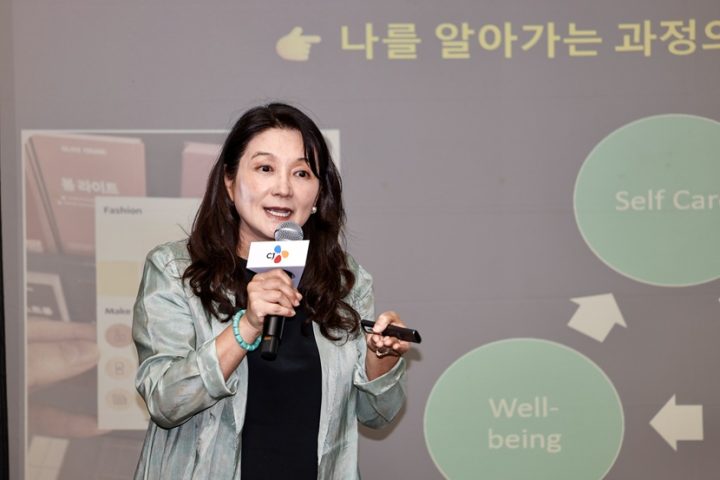
Professor Kim identified three keywords for understanding Gen Z and Gen Alpha in the U.S.: diversity, platforms and fandoms, and co-creating knowledge.
The first is diversity. For Gen Z and Gen Alpha in the U.S., different races, languages and cultures are part of everyday life. They have grown up alongside people from different backgrounds at school, in their communities and online. Rather than learning about difference as something separate, they have grown up surrounded by it.
The way they answer the question “Who am I?” is also different from that of previous generations. More than where they were born or where they live, the platforms they use, the content they like and the fandoms they belong to have become important ways of defining who they are.
The discussion then turned to the final keyword, co-creating knowledge. Rather than simply accepting the information presented to them, Gen Z and Gen Alpha are comfortable participating, exchanging opinions and creating meaning together. They are more comfortable as participants than observers, a defining characteristic of these generations.
Following these three keywords, a clearer picture began to emerge: a generation that naturally embraces diversity, connects through shared interests and participates in creating new meaning together. The lecture was beginning to bring the first pieces of the puzzle together.
A Familiar Yet New K: Why It Resonates With Gen Z and Gen Alpha in the U.S.
Gen Z and Gen Alpha in the U.S. have grown up in diverse environments, share their tastes through platforms and fandoms and are accustomed to participating and creating meaning together. Look at their everyday lives today, and K is increasingly part of the picture. They listen to K-pop and follow styles seen in music videos. They try Korean-style chicken, seek out K-beauty products and extend their interest to concerts and merchandise from artists they like. K’s influence now reaches beyond what they watch and listen to, shaping their lifestyles in new ways.
So what makes K different?
“K’s appeal lies in its ‘familiar yet new’ quality.”

The concept is easiest to understand through Korean-style fried chicken. Chicken is already a familiar food in the U.S., but Korean-style fried chicken adds extra crunch and a variety of sauces, turning a familiar dish into something new. Rather than feeling unfamiliar, it offers the pleasure of discovering something unexpected in a food people already know.
Stray Kids’ “Thunderous” follows a similar pattern. Its striking performance and stylish visuals first capture attention, while Korean musical elements and traditional imagery add another layer, creating something fresh within a familiar framework.
The interesting part came next. While Gen Z and Gen Alpha enjoy fast-paced formats such as short-form videos and livestreams, they are also willing to invest time and money in things they can keep, such as LPs, CDs and photocards. These may seem like different ways of engaging with content, but K naturally connects the two, extending the experience from digital content to concerts, merchandise and fandom. Professor Kim explained that this ability to span different forms of engagement is one reason K has moved beyond individual pieces of content to become part of everyday life.
“K’s success is no coincidence. It reflects broader changes in the way people consume culture.”

The discussion moved from chicken to music videos and then to the consumption habits of Gen Z and Gen Alpha. As we followed the lecture, the answer to the opening question became clearer. Rather than presenting an unfamiliar culture as something entirely new, K is finding its way into everyday life in the U.S. by adding new experiences to things people already know.
Making K-Lifestyle Part of Everyday Life Around the World: A Future CJ Envisioned Decades Ago
Professor Kim’s lecture did more than explain why Gen Z and Gen Alpha in the U.S. are drawn to K. It also showed how K is moving beyond music and drama into food, beauty and live experiences, becoming part of a broader lifestyle.
As we listened, another scene came to mind: the vision Chairman Lee Jay-hyun outlined more than 30 years ago when he described the direction of CJ’s cultural business.
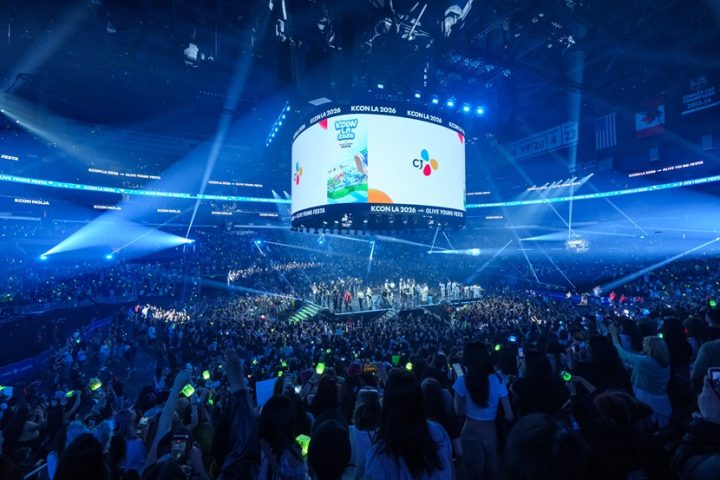
“I will make it possible for people around the world to watch two to three Korean films every year, eat Korean food once or twice a month, watch one or two Korean dramas every week and listen to one or two Korean songs every day, enjoying Korean culture as part of their everyday lives.”
— Lee Jay-hyun, Chairman of CJ Group
This is where CJ’s businesses come together as part of a single picture. CJ ENM creates K-content, while CJ CheilJedang and CJ Foodville bring K-food to the table. OLIVE YOUNG connects K-beauty with everyday experiences, and CJ Logistics helps deliver those experiences to consumers across borders. Rather than operating separately, content, food, beauty and logistics form interconnected parts of a single K-lifestyle ecosystem.
The vision Chairman Lee Jay-hyun articulated more than 30 years ago — people enjoying Korean culture as part of everyday life — is gradually becoming a reality.