This summary was generated with AI. We recommend reading the full article for accurate information.
K-Fieldbook is a column series by The Korea Herald’s No Kyung-min, offering field notes on the K-lifestyle. The second installment examines the history of gimbap, how it reflects changing Korean culture and its emerging popularity on the world culinary stage.
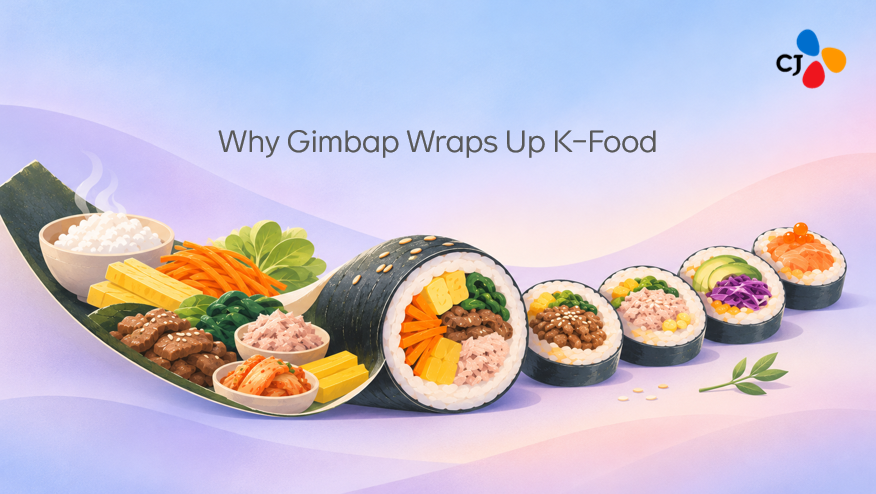
You are what you eat, or so the saying goes. Yet the line that inspired it, penned by the French gastronome Jean Anthelme Brillat-Savarin in 1825, dug deeper: “Tell me what you eat, and I will tell you what you are.”
I would invoke his words with anyone eating gimbap, a coil of rice and seaweed from Korea, and suggest that they have already internalized a little of Korean food culture — to exaggerate only a touch.
For all that every country’s cuisine is steeped in nostalgia and national character, gimbap’s particular resonance rests on its substance, from which springs an almost boundless variety of fillings that holds up a mirror to the country that makes it.
Those sesame-oiled logs — not to be confused with sushi or its assorted lookalikes — are not one dish but a dozen or more, wrapped around much of what defines K-food culture. That breadth, delivered cheaply and conveniently to boot, gives their global appeal much of its force, as illustrated by the swelling overseas sales of CJ Foods’ bibigo gimbap.
A Nation Rolled In
Its two-word name says it all: before there was gimbap, there were gim and bap.
According to the Korea Heritage Service, Koreans have eaten gim, or seaweed, since the Silla Dynasty (57 BCE-935 CE), and by the 17th century they were farming it, prizing it enough to send to the royal court. Bap means cooked rice, which forms gimbap’s neutral base for almost any filling.
To eat gimbap, therefore, is to take in all that gim and bap hold together, for at heart it is a form of ssam — the Korean tradition of bundling rice and other ingredients in wrappers ranging from lettuce to gim. Koreans have rolled their hopes into it, too. On the first full moon of the lunar year, for instance, families folded rice into gim in a custom called bokssam, or wrapping fortune.
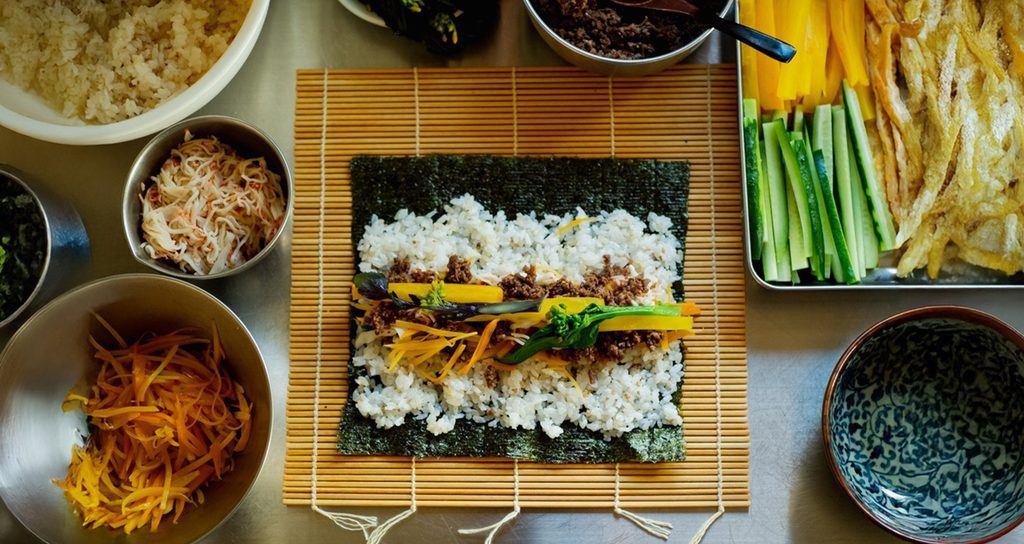
What goes inside has always mattered most, and, sliced open, a roll of gimbap lays out its innards like a timeline of Korea.
The first rolls were stuffed with little more than seasoned greens. Pickled radish came during the Japanese colonial era, followed by ham and sausage after the Korean War. The roll’s contents have since kept pace with the national appetite, from aged kimchi and tuna to bulgogi and dried squid strips.
Geography shapes the roll as much as history does, for gimbap speaks with the accent of wherever it is made. Tongyeong, a coastal city in South Gyeongsang Province, serves its rice rolls sans fillings, with spicy squid and radish kimchi on the side, while Jeju Island folds in abalone and Busan favors salty pollack roe and soft egg.
Tongyeong’s version illustrates gimbap’s role as a supporting dish, since the roll’s mild, sesame-scented rice often tastes best beside bolder fare. A simple vegetable roll tempers a bowl of fiery ramyeon, balances sticky-sweet fried chicken and soaks up tteokbokki sauce.
Those pairings are a staple of the franchises bearing the gimbap name, the best known of which is Gimbap Heaven. These chains seized on the very convenience that first made gimbap a comfort food, selling the rolls cheap — though no longer cheap enough, some would argue — to anyone short on time.
Their menus stretch to dozens of other dishes, yet the roll remains the hearty base. Bibimbap is among the most common of them, but then gimbap, I’d say, is a portable take on it, minus the hassle of mixing or the need for a spoon. What else could explain the array of bibimbap options at such restaurants, if not that the two are kin?
A Culture Rolled Out
Abroad, the roll’s two building blocks have made names for themselves.
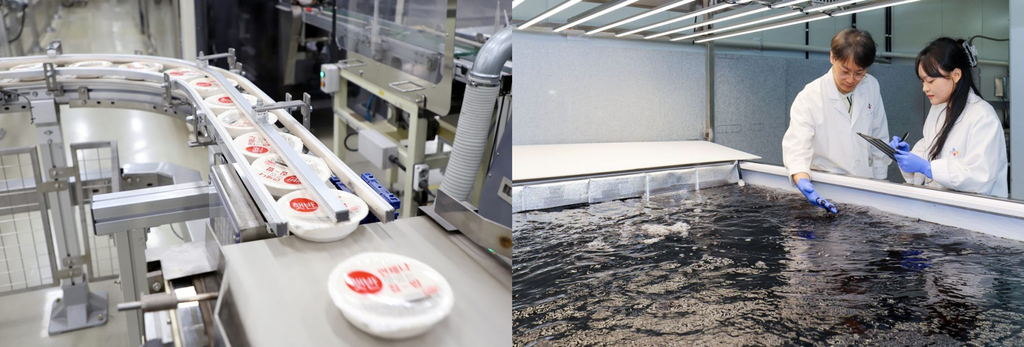
Gim, which crossed a billion dollars last year to become Korea’s top seafood export, has gained such prominence that the Ministry of Oceans and Fisheries now seeks trademark protection for it globally. Exports of ready-to-serve rice, meanwhile, are on track to top 100 million USD for the first time.
Korean food makers have taken note, with CJ Foods, chief among them, building land-based gim farms that can produce year-round. In ready-to-serve rice, CJ’s Hetbahn, synonymous in Korea with the microwavable kind, commands about 65% of the domestic market and now reaches some 60 countries.
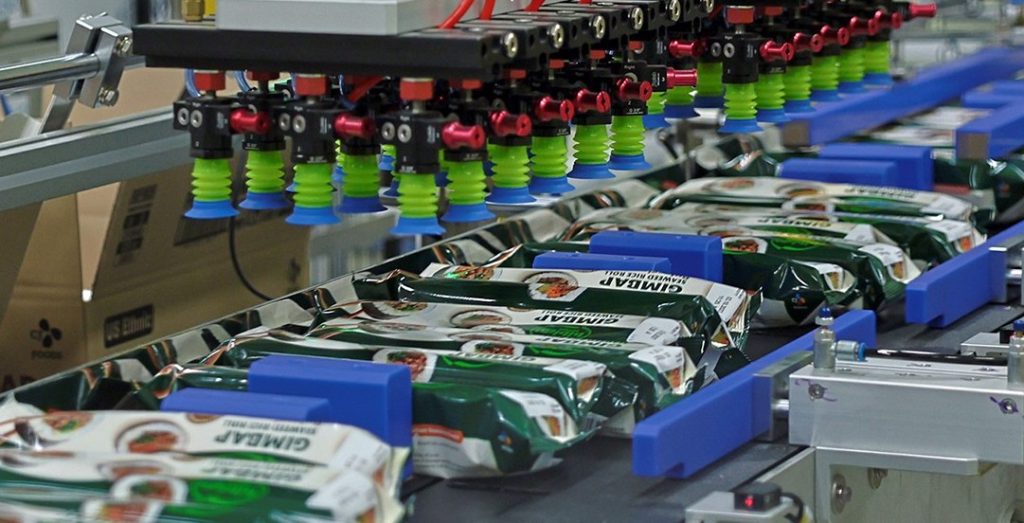
Gimbap has made the journey too, thanks largely to quick-freezing technology that preserves the rice’s texture through a long voyage. CJ, for one, tailors the rice’s texture and sheen to each variety, heats every filling at its own set temperature and time, and freezes the rolls with a process designed for gimbap to hold their quality through shipping and storage.
Unfamiliar as they are to most Koreans, the frozen rolls have won over plenty of eaters with their low price, plant-based fillings and microwave-ready convenience, most notably in the U.S., where rice rarely takes center stage on the plate.
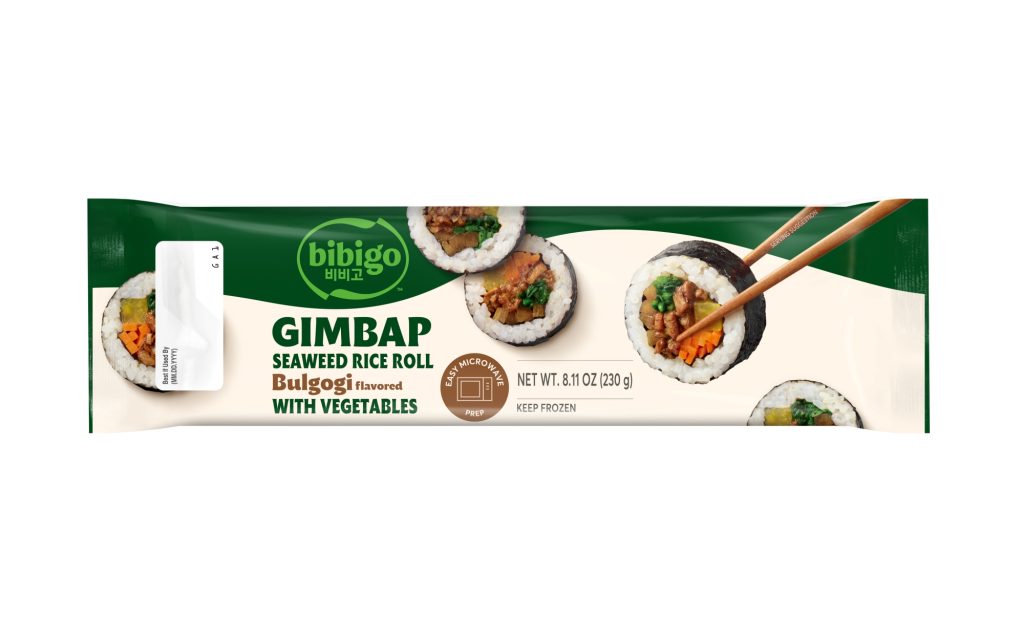
The rolls have chalked up steep gains there, with CJ Foods reporting that sales of its bibigo gimbap jumped 59% year-on-year in the first seven months of 2026, the number of stores carrying the rolls more than doubled, and new flavors drawn from Korean ingredients are now in the works.
Not every roll abroad comes frozen, and eaters there have begun adapting it to their own tastes. Kimbap Lab, born of a founder’s gluten sensitivity, makes every roll gluten-free, with vegan options for American wellness culture. At Kim’s Kimbap, customers build rolls to order, Subway-style.
Other kitchens have brought a fine-dining pedigree to the roll. In March, a chef trained at a Michelin-starred Manhattan sushi temple opened a pop-up called TBD Gimbap, with a larger shop planned for 2027. The crossover is telling: a chef versed in omakase dining, where prized fish command premium prices, has turned to a far humbler comfort food.
Whether gimbap belongs in fine dining is anyone’s guess, though “The Gimbap Book,” a new cookbook by chef Woo Jeong-wook, offers its own recipe for the roll’s future. A good roll, it suggests, welcomes the world’s ingredients, and its pages set classic vegetable and bulgogi rolls beside avocado, eel and even caviar — yes, caviar.
Caviar or not, the book has a point, and this much I can say with equal confidence: gimbap can take a little polish while keeping its comfort-food soul intact. After all, who eats a gourmet burger and forgets it’s still a burger? And who doesn’t eventually head back to the corner joint for a cheaper one that is just as comforting?