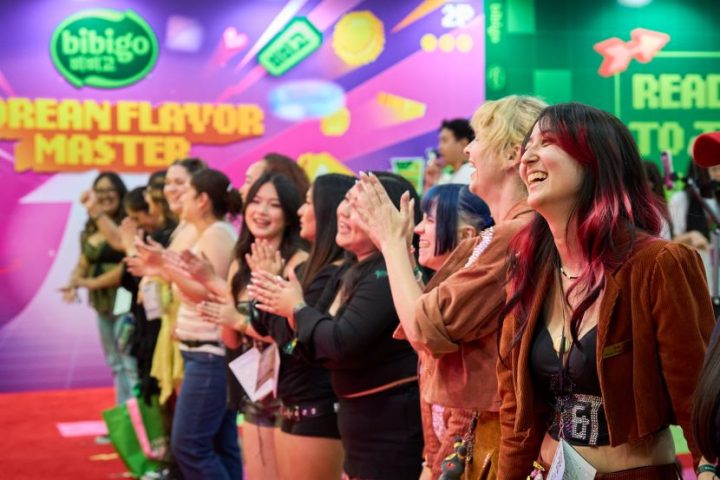
K-bakeries, K-beauty and K-food are growing interest in K-culture in Los Angeles and across the U.S.
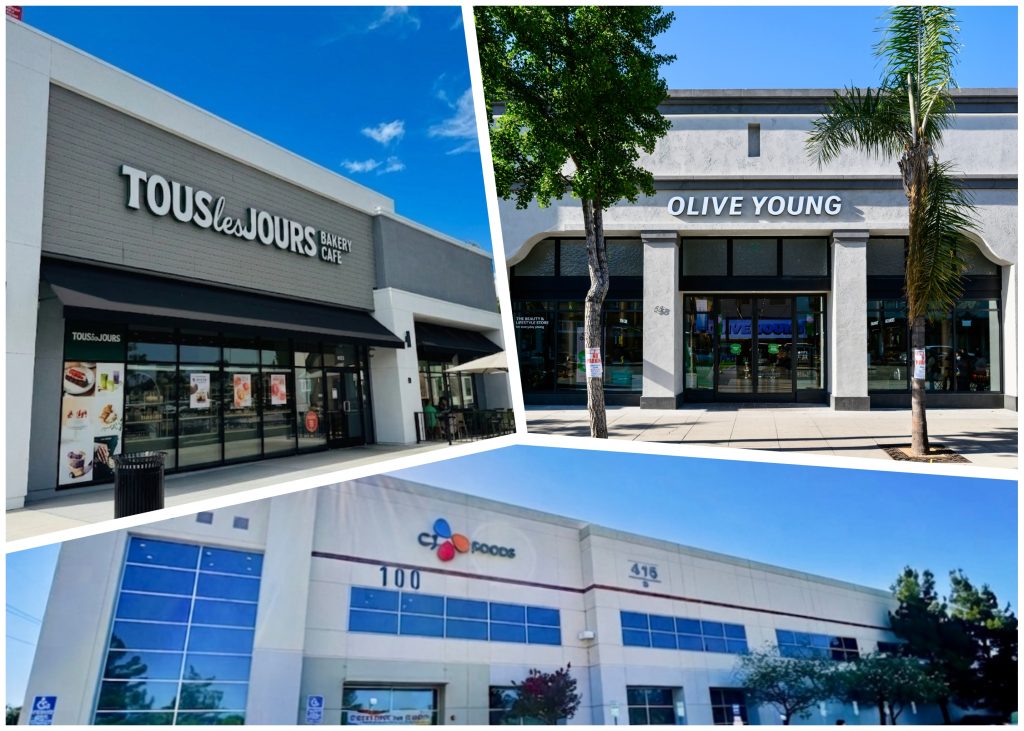
Last week, dozens of Korean journalists gathered in Los Angeles, set to move through a slightly unusual itinerary. Their first stops were not a concert venue or a convention center. Instead, they visited a neighborhood bakery in a suburban shopping center, a beauty store in Pasadena and a mandu factory east of Downtown LA.
Together, these three sites shared the same story: K-food, K-bakeries and K-beauty are becoming part of Americans’ everyday lives. The K-wave is moving from a novelty to an increasingly familiar part of everyday life — firmly entering the U.S. mainstream. At the center of this shift are CJ’s lifestyle brands.
That momentum is also behind CJ’s confidence in its next phase of growth. On August 15, at its “Global K-Lifestyle Vision” presentation in Los Angeles, the company announced plans to grow its North American sales from more than 8 trillion KRW (5.8 billion USD) last year to 12 trillion KRW (8.7 billion USD) by 2028. At the heart of this growth strategy is a plan to connect food, content and beauty to bring the K-lifestyle into the everyday lives of U.S. consumers. Here’s a closer look at how this vision is already taking shape.
① TOUS les JOURS La Habra — American Shoppers Pick Their Own Bread and Cakes
The first stop for the reporters was La Habra in Orange County, a typical suburban community where Latino residents make up about 60% of the population. At La Habra Marketplace, a shopping center home to major retailers including Ross, Hobby Lobby, Petco and Chick-fil-A, a TOUS les JOURS sign stands among the familiar storefronts. Large grocery stores like Walmart and Trader Joe’s are also clustered nearby.
Together, these surroundings show that the Korean bakery is no longer a novelty destination but part of American consumers’ everyday routines.
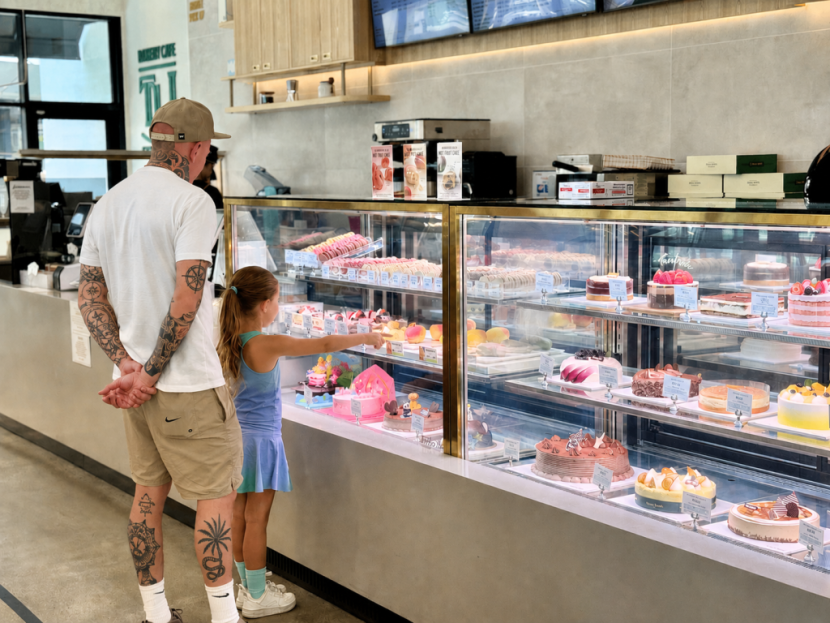
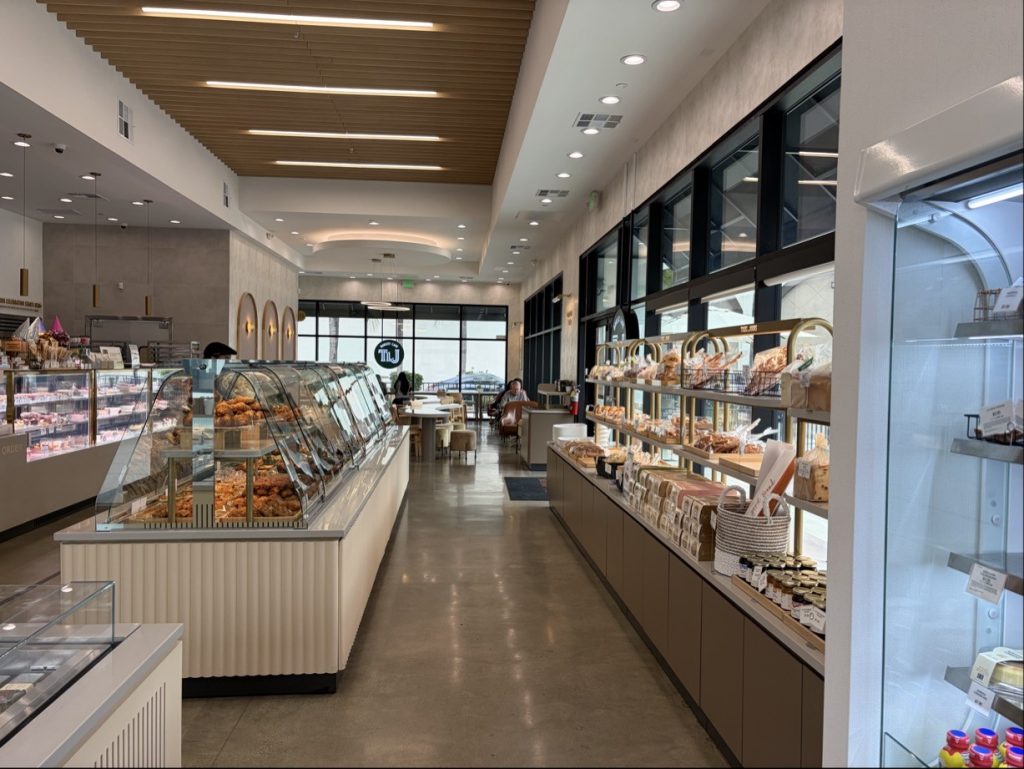
Step inside, and for a moment, it is easy to forget you are in the U.S. The shelves are filled with kimchi croquettes, twist doughnuts, salt & butter rolls, rich milk cream bread, and more, while local customers browse the store with trays and tongs, selecting their own bread — just as they would at a TOUS les JOURS in Korea.
One notable difference is that most customers here are not Korean. The store’s customer base reflects the surrounding community, with about 60% Latino and 25-30% white customers. Rather than a bakery catering to the nostalgia of one particular community, TOUS les JOURS has become a neighborhood bakery for everyone.
Opened in July last year, the La Habra location spans approximately 321 square meters and has 80 seats. It is the first TOUS les JOURS location in North America to feature the brand’s latest “BI 4.0” store design, previously introduced at its Apgujeong and Gangnam locations in Korea.
As a company-operated store, the La Habra branch also serves as a model location where U.S. franchisees can see firsthand how the brand approaches store operations, merchandising and customer service. At the same time, it serves as a testing ground where new products and consumer responses can be closely monitored.
TOUS les JOURS Bread: Fresh, Light and Delicious
Customers at the store shared illuminating thoughts about their experiences. “I tried some bread that my child’s friend’s mother gave us and later found out it was from TOUS les JOURS,” said one Korean American who has lived in the U.S. for more than 30 years. “They have more varieties than other bakeries, so I come here often.” Another customer commented, “American bread tends to taste heavier, but TOUS les JOURS bread has a lighter taste, which I prefer.”
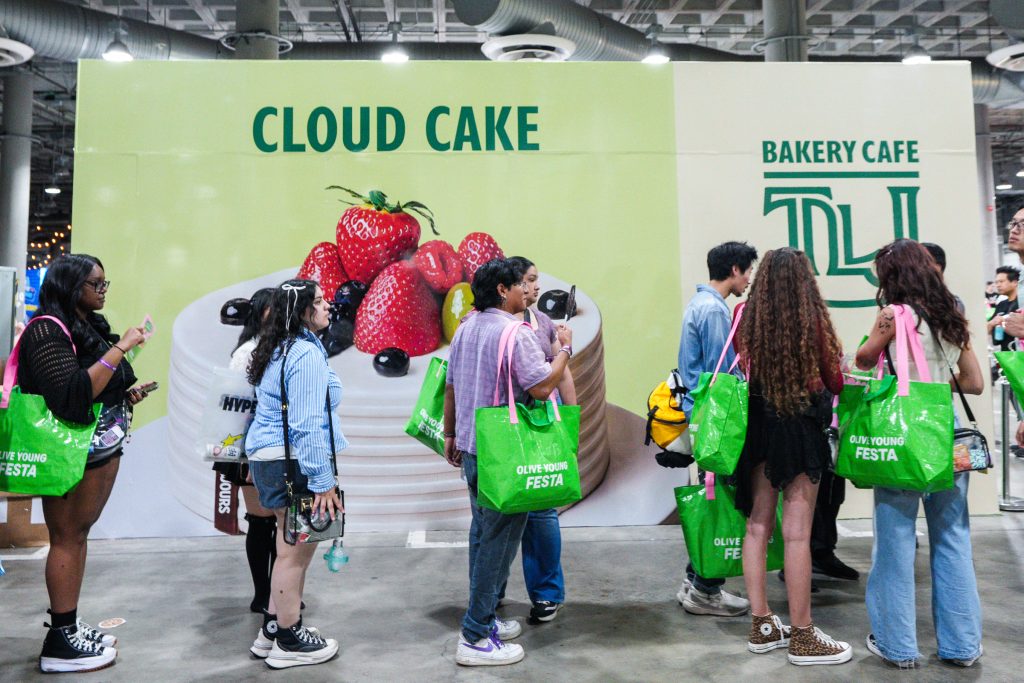
The best example of that lightness is the Cloud Cake, TOUS les JOURS’ fresh cream cake. Unlike rich, heavy and sweet butter cakes commonly found in the U.S., TOUS les JOURS bakes its cakes in-store and tops them with fresh whipped cream. Local consumers describe the texture as “cloud-like” and see the cakes as a premium offering. The 44 USD Cloud Cake has become one of the bakery’s most popular and iconic products.
The press group happened to visit as three new fruit-shaped cakes from the “NOT FRUIT. CAKE” series, which had drawn long lines when they first launched in Korea, were making their U.S. debut under playful names such as “I’m Not Peach. Cake.” Passersby repeatedly stopped to take a look at the curious not-cake fruit cakes.
Rather than making major changes to suit American tastes, TOUS les JOURS has largely stayed true to the flavors and forms of its Korean products, making its authenticity a key point of differentiation. Even without heavily emphasizing its origins, about 72% of visitors reportedly recognize TOUS les JOURS as a Korean brand when they visit.
The self-service format is also being embraced as a new experience. Unlike American bakeries, where staff typically retrieve products for customers, TOUS les JOURS lets shoppers browse the selection and choose their own items with trays and tongs.
Eight Consecutive Years of Profitability, More Than 200 Prospective Franchisees
In 2004, TOUS les JOURS became the first Korean bakery brand to enter the U.S. market. As of June this year, it operates 205 locations across North America. Its U.S. subsidiary has remained profitable for eight consecutive years since 2018. Sales also grew from 51 billion KRW (36.9 million USD) in 2021 to 194.6 billion KRW (140.8 million USD) last year, nearly quadrupling in four years.
Late last year, TOUS les JOURS began operations at an approximately 90,000-square-meter production facility in Gainesville, Georgia, capable of producing more than 100 million products annually. It is also the first production plant built in the U.S. by a Korean bakery company.
More than 90% of TOUS les JOURS locations are franchised, and more than half of its franchisees operate multiple stores, reflecting strong satisfaction with the business. More than 200 prospective franchisees are currently waiting to open locations.
What clearer evidence of mainstream adoption could there be than local entrepreneurs investing their own money to open a K-bakery business? From the East, Midwest and West Coast to Hawaii, the vision of reaching 1,000 locations by 2030 doesn’t seem like a far-fetched goal.
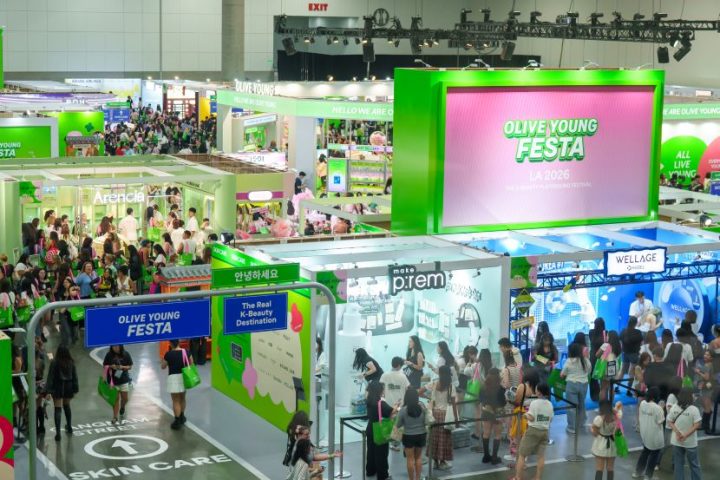
② OLIVE YOUNG Pasadena — A Hands-On Store Where Customers Can Test, Try and Discover
The next stop was Old Pasadena, a high-end lifestyle district in northeast Los Angeles and home to the first OLIVE YOUNG store in the U.S. Opened on May 29, the store spans approximately 804 square meters. When reporters arrived just before the 10 a.m. opening, customers were already gathered outside.
Adinya, 19, was already on her third visit. She had first come without realizing OLIVE YOUNG was a Korean brand but soon became a regular. Michelle, 21, discovered K-beauty after developing an interest in K-pop. Brooke and Julia, college students from Chicago, first encountered OLIVE YOUNG during a trip to Korea two years ago. After hearing that a store had opened in Los Angeles, they traveled specifically for the opening. “Sephora focuses more on color cosmetics, while OLIVE YOUNG offers a wide range of basic skincare products,” they shared.
The difference is evident in the store layout itself, from the moment that customers walk in. Unlike the U.S. beauty market, where color cosmetics have a strong presence, OLIVE YOUNG highlights skincare products from brands such as Anua, ROUND LAB and REJURAN, which customers can see immediately upon entering the store. About one-quarter of the store is dedicated to skincare, putting the category front and center. More than 400 brands and 5,000 products, with K-beauty brands accounting for more than 80%, are organized across eight categories. Rather than simply grouping products by brand, OLIVE YOUNG curates them by ingredients, skin concerns, functions and routines.
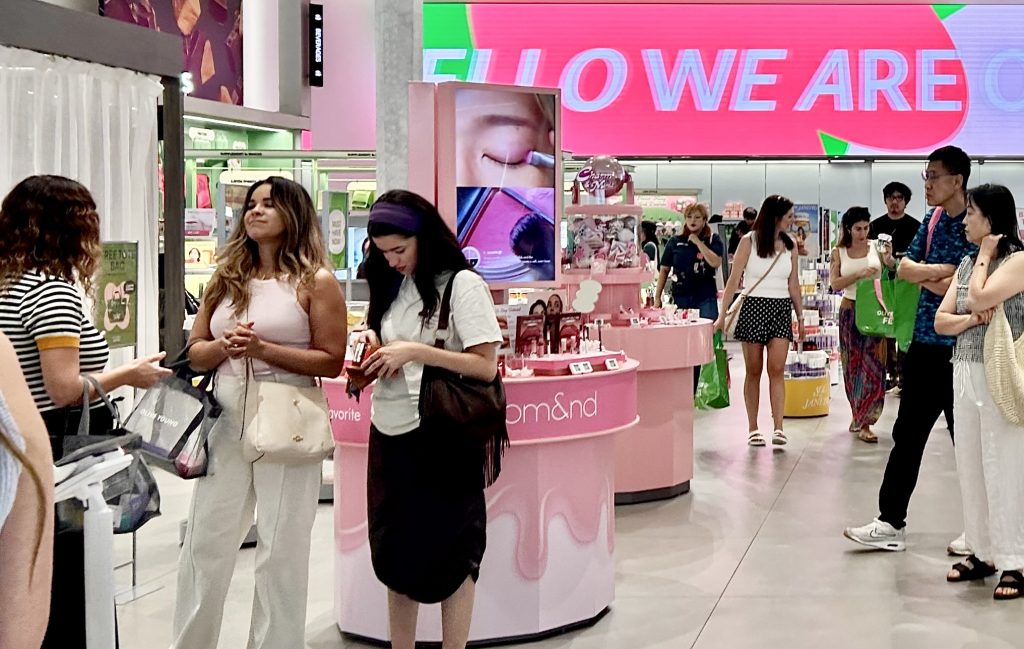
Some displays feature signs explaining the characteristics and benefits of ingredients such as rice and beans. There are also dedicated testing areas for toner pads and beauty devices, which may be unfamiliar to some local consumers. With even a washing station built into the store, shoppers can easily try toner pads directly on their faces.
Lines Form for OLIVE YOUNG’s ‘SKIN SCAN’ and ‘THE BEAUTY LAB’
A long line had formed in front of “SKIN SCAN,” an AI-powered skin analysis service located at the center of the store. The service analyzes six facial images to assess pore size and depth, wrinkles, skin temperature and irritation, then sends the results directly to the customer’s phone.
At “THE BEAUTY LAB” just behind it, customers can use the SKIN SCAN results to receive a free 15-minute one-on-one skincare lesson, covering double cleansing, layering serums and creams and how to choose pads for different skin concerns. About 150 people use the service each day on average.
Leticia, 27, who was visiting the store while traveling, was impressed after receiving a skin scan. “It felt like it was taking a deep look at everything about my skin, from dryness and redness to skin temperature,” she said. “The skin analysis technology is really impressive, and it was a great help when choosing products.”
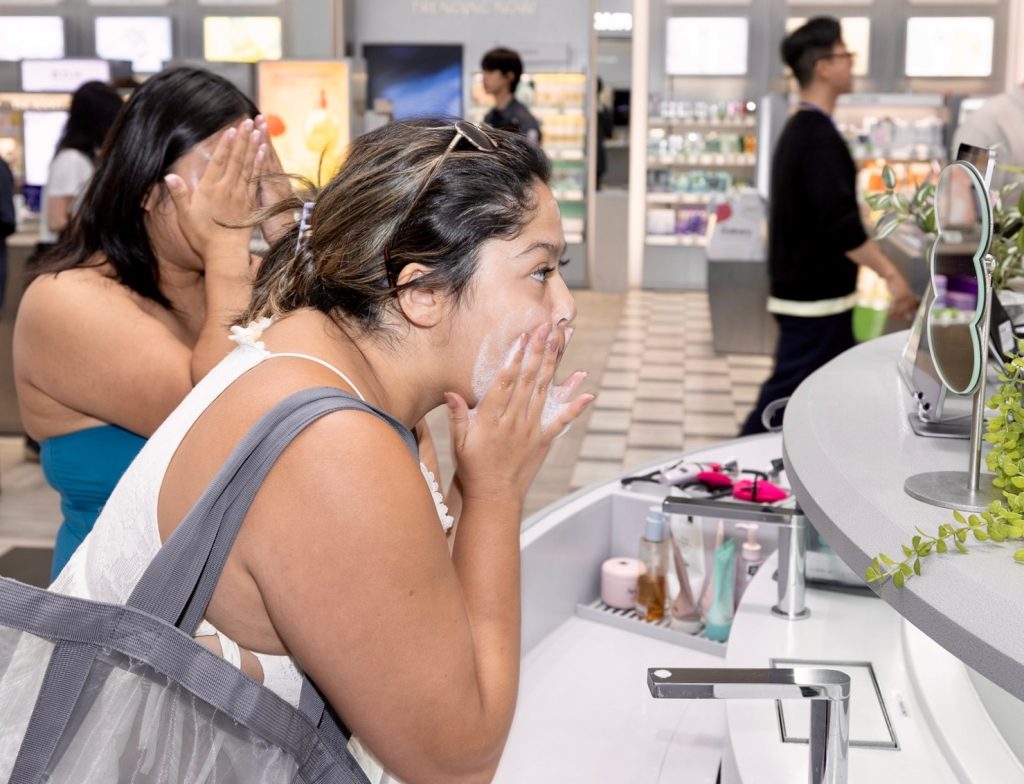
In this way, the U.S. store serves as a space where consumers can freely explore products based on their skin concerns and discover K-beauty for themselves. At the same time, local employees are also taking on roles beyond sales, serving as K-beauty ambassadors who help customers understand ingredients, benefits and proper skincare routines.
Expanding to 5 Stores in the First Half of Next Year, With More Online and Offline Touchpoints
K-beauty exports to the U.S. reached $2.2 billion in 2025, making Korea the largest source of imported cosmetics in the U.S., ahead of France. The milestone demonstrates how K-beauty has moved beyond a niche category to enter into the mainstream of the imported cosmetics market.
OLIVE YOUNG has moved at a breakneck pace, establishing its U.S. subsidiary in January last year, building the OLIVE YOUNG Distribution Center (Bloomington) spanning approximately 6,612 square meters in March, launching its Pasadena store and a dedicated U.S. online store in May and opening its Century City location in June. The company plans to operate five stores in California by the first half of 2027.
This month, OLIVE YOUNG also launched the “OLIVE YOUNG K-Beauty Edit” at Sephora stores and online, curating about 150 products from 19 K-beauty brands. Through the initiative, OLIVE YOUNG is serving as a gateway to the global market for small and midsize K-beauty brands that may otherwise find it difficult to enter major retail channels on their own.
③ Beaumont Plant — The ‘Heart of K-Mandu’ With a 70% Automation Rate
The final stop was CJ Foods’s Beaumont plant, located an hour east of Downtown Los Angeles by car. Spanning approximately 41,300 square meters, roughly the size of six soccer fields, it is CJ Foods’s largest Asian food production facility among its 20 North American plants. Mandu, fried rice, sauces, noodles and seaweed snacks move continuously along automated conveyor lines, where they are produced and packaged around the clock.
Simply entering the facility requires a rigorous process. Visitors must wear hard hats, safety glasses, hair covers and shoe covers and remove all jewelry, including rings and watches. Only after sanitizing hands, walking through an air shower and disinfecting the soles of their shoes are they allowed to enter the production area. The facility’s strict hygiene standards are in alignment with the U.S. Department of Agriculture (USDA)’s standards.
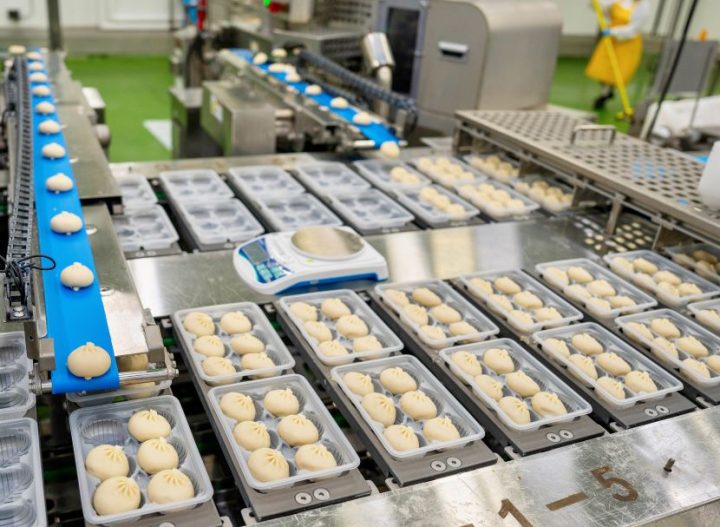
Inside the production area, the rich, savory aroma of mandu filling immediately rose into the air. Large containers of mandu filling were fed into machines, while formed mandu emerged at regular intervals along the line. From the moment raw ingredients enter the machines to when the finished products are packaged, the entire cycle takes just 60 minutes. About 70% of the mandu production process is automated, with no workers involved in the steaming and cooling stages. At the final packaging stage, collaborative robots lift boxes and stack them neatly onto pallets.
The facility produces more than 160 tons of mandu a day, including about 113 tons of bibigo mandu. At 187 grams per steamed bibigo mandu, that amounts to approximately 860,000 pieces a day. It also produces about 23 tons of noodle products each day. It accounts for approximately 58% of Schwan’s total mandu production and about 60% of bibigo mandu production in North America, making it, quite literally, the “heart of K-mandu.”
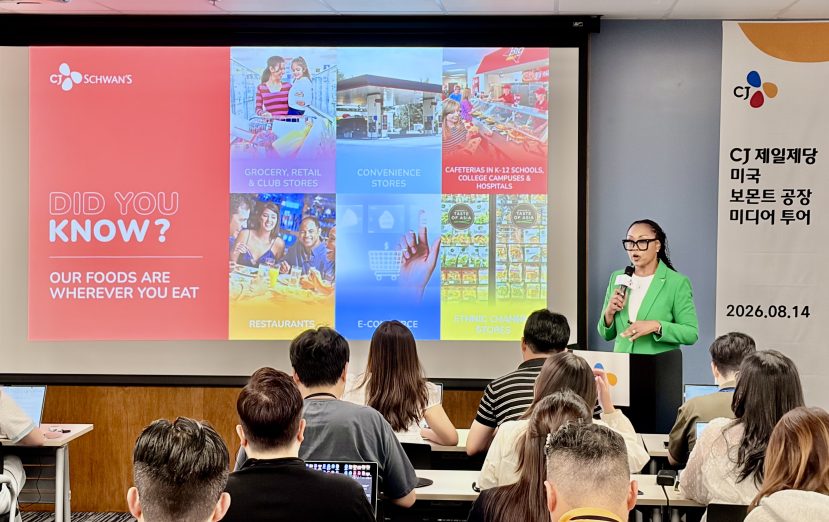
“Our goal is to make CJ food available to consumers anywhere in the U.S.,” said Mellisa Thompson-Troupe, Vice President of Manufacturing at CJ Schwan’s. She added that listening to local consumers is a top priority in product development, and that the company is continuing to improve areas such as packaging convenience, an important factor to U.S. consumers.
A prime example of this localization strategy is Chicken & Cilantro Mandu. Instead of pork, a filling more familiar in Korea, the dumplings are filled with chicken and cilantro to suit U.S. consumer preferences. It has since become one of the most popular mandu products in North America.
From the Novelty Food Section to the Main Freezer Aisle
Thanks to the nationwide distribution network secured through the 2019 Schwan’s acquisition, bibigo products are now sold at approximately 80,000 retail locations, including Walmart, Kroger and Costco. In 2024, bibigo held the No. 1 position in the U.S. B2C mandu market with a 41% market share.
The impressive portfolio is continuing to expand, from the bibigo Cooked Sticky White Rice, which is gaining attention as a “healthier carbohydrate option than bread,” to the tubed gochujang hot sauce and Soy Honey Sobaba Chicken sold at Costco. Meanwhile, Schwan’s Red Baron pizza has also taken the No. 1 spot in the U.S. frozen pizza market, surpassing Nestlé’s DiGiorno with a 20.8% market share.
CJ Foods’s U.S. food business sales grew 48% in five years, from 3.3286 trillion KRW (2.4 billion USD) in 2020 to 4.9136 trillion KRW (3.6 billion USD) last year. In the first quarter of this year alone, sales reached 1.2902 trillion KRW (933.7 million USD).
To meet growing demand, the company is also building a new Asian food plant in South Dakota, scheduled for completion in 2027. Watching mandu being packed into boxes on the production line, a thought suddenly came to mind: Some of those mandu could be on an American family’s dinner table as soon as tomorrow. Perhaps CJ’s vision of making the K-lifestyle part of everyday life is not so far away after all.
Closing — Everyday Life Happens Every Day. That Is the Real K-Lifestyle.
What stood out most across the three sites was not the scale of the numbers, but the scenes of everyday life unfolding: huge volumes of products moving continuously along the Beaumont plant’s packaging lines, popular K-bakery pastries filling trays at TOUS les JOURS La Habra, and customers at OLIVE YOUNG Pasadena listening attentively to skincare guidance. These were scenes of the K-culture that CJ has cultivated for more than 30 years gradually making its way into the everyday spaces of U.S. consumers — their kitchens, dining tables, beauty routines and daily lives.
A CJ survey of 1,000 U.S. consumers conducted last December found that 30% had experienced all four categories — K-food, K-beauty, K-pop and K-content — while 75% had experienced two or more. The figures suggest that listening to K-pop, watching Korean dramas, eating Korean food and buying Korean beauty products are already connected as part of a broader consumer journey.
Ultimately, this is what the reporters witnessed. The K-wave is no longer something novel to discover or a one-time event. It has become part of American families’ dinner tables, weekend trips to the neighborhood bakery and morning skincare routines.
And on the front lines of that everyday shift are CJ employees working on the production lines in Beaumont, behind the ovens in La Habra and on the store floor in Pasadena. The belief held by CJ 30 years ago that “culture is the industry of the future” is now bearing fruit in the everyday lives of Americans.