CJ FOODS JAPAN’s Ichikawa Sayo shares how bibigo is helping Korean-style mandu move from an unfamiliar option to an everyday choice in Japan’s frozen dumpling market
Wherever you go in the world, you are likely to come across foods that resemble mandu. Though they go by different names, they all share the same basic identity: a filling wrapped in dough. From there, they have evolved into countless forms shaped by local tastes and food cultures.
Japan is one of the countries where gyoza culture runs especially deep. More than just a popular menu item, gyoza has become an everyday staple and a kind of comfort food for consumers. That makes Japan an especially challenging market for overseas dumpling brands hoping to break through the long-established dominance of gyoza.
Yet in Japan’s frozen dumpling market, bibigo is carving out a new place for Korean-style mandu. We spoke with Ichikawa Sayo, who leads the Brand Communication Team at CJ FOODS JAPAN, about the current state of K-food in Japan and the marketing strategy behind bibigo’s growth.

Drawn to the Unlimited Potential of Korean Food
Since joining CJ FOODS JAPAN in 2019, Ichikawa has been responsible for consumer communications for key brands such as bibigo and micho. Her work spans advertising, social media, and in-store promotions, all with the goal of expanding brand influence at every point of consumer contact in Japan.
For someone long interested in both the food industry and marketing, the reason she chose CJ FOODS JAPAN was clear.
“What really drew me in was the opportunity to introduce Korean food, which was not yet widely familiar, to consumers across Japan. Korean food feels much more familiar now, but when I joined, that was not yet the case. I felt there was enormous room for growth.”
Bringing the Appeal of Mandu to the Land of Gyoza
Today, CJ FOODS JAPAN’s mandu business is approaching a major turning point. With a mandu production plant set to be established in 2025, the company is strengthening its in-house production system and preparing for a new leap forward, one aimed not only at representing Korean food, but at becoming part of the mainstream frozen dumpling market in Japan.
According to Ichikawa, major Japanese food companies are also taking notice of CJ FOODS JAPAN’s moves. In fact, some have even begun launching products under the name “mandu” rather than “gyoza,” signaling a shift that would have been difficult to imagine before.
The road to that change, however, has not been easy. Japanese consumers are known for having high standards and relatively conservative expectations when it comes to taste and food culture.
“Japan is a market where familiar, everyday foods have strong staying power. Simply saying that something is popular in Korea is not enough to persuade consumers to make a purchase.”
Ichikawa said she thought deeply about how to preserve the unique identity of Korean mandu while helping it blend naturally into Japanese consumers’ everyday lives. Rather than focusing only on its popularity abroad, the team chose to frame the product’s value from the consumer’s point of view, highlighting ideas such as “a convenient meal option on busy days” and “something the whole family can enjoy together.”
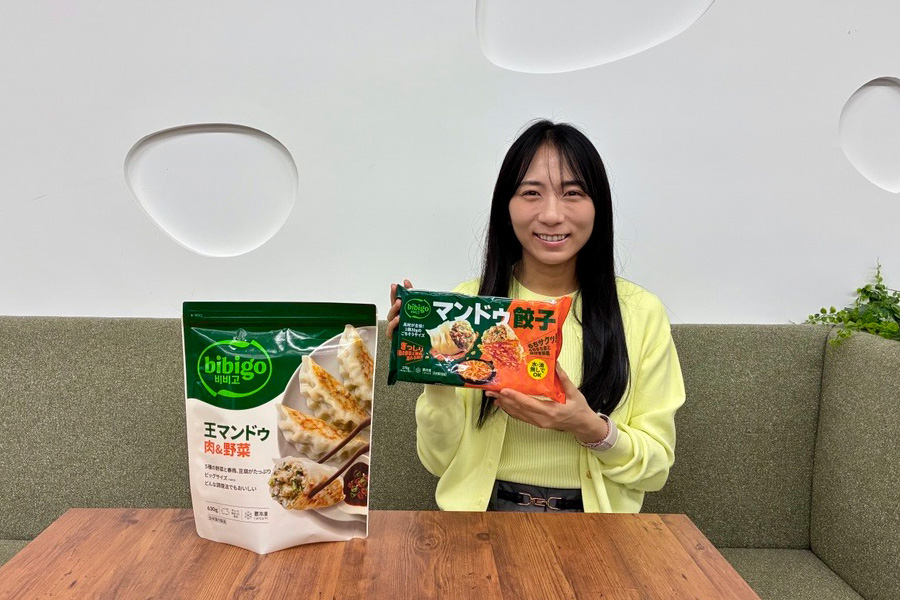
Those efforts have helped shift consumer perception in Japan. What was once seen largely as a niche food for fans of Korean culture is now increasingly recognized as a category of its own. Consumers are beginning to appreciate that bibigo mandu, with its chewy wrapper and generously filled interior, offers a clear point of difference from traditional Japanese gyoza.
From Something Unfamiliar to an Everyday Choice
Of course, one question still remains: “How exactly is it different from the gyoza we already know?” For Ichikawa, the key to overcoming that barrier is simple: experience. Once consumers actually try the product, many are impressed by its quality.
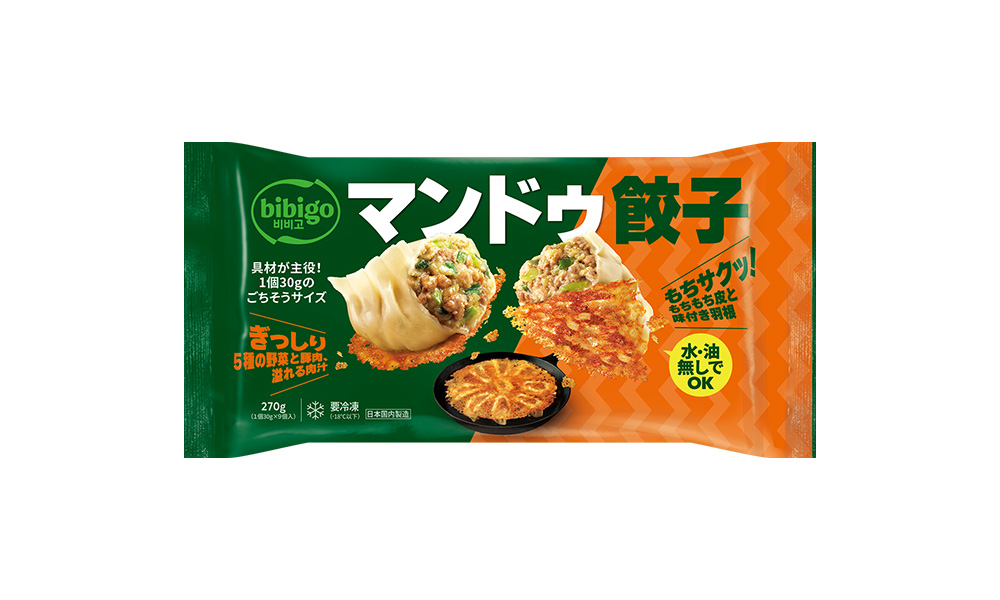
That is where bibigo Mandu Gyoza, recently launched in Japan, comes in. The product serves as a strategic bridge, combining the hearty ingredients and satisfying bite of Korean mandu with the flavor profile and convenience Japanese consumers expect from gyoza. In that sense, it functions as an accessible entry point for consumers who may be unfamiliar with mandu.
To support the launch, the team rolled out a digital campaign built around story-driven content titled Cheer Up, Manager Kano of the Mandu Division. The campaign followed well-known Japanese comedian Eiko Kano as he worked to achieve his sales target for mandu. The response was immediate. A mandu-themed song performed by Kano himself surpassed one million views in just three days.
Consumers began posting their own reviews and purchase 인증 posts in large numbers, and some stores even saw bibigo Mandu Gyoza sell out. In fact, following its launch in March 2026, the product generated approximately KRW 700 million in sales in its first month alone. It also secured placement in around 6,000 retail outlets across major local distribution channels within a short period of time.
Driven by that momentum, bibigo mandu achieved a major milestone this March, reaching a 10% market share in Japan for the first time. The broader goal is to first encourage trial through approachable products like bibigo Mandu Gyoza, then gradually guide consumers toward more authentic Korean-style offerings such as bibigo Wang Gyoza, ultimately expanding the mandu category as a whole. Step by step, Ichikawa is moving closer to that vision.
A Marketer’s Dream of Expanding a New Food Culture
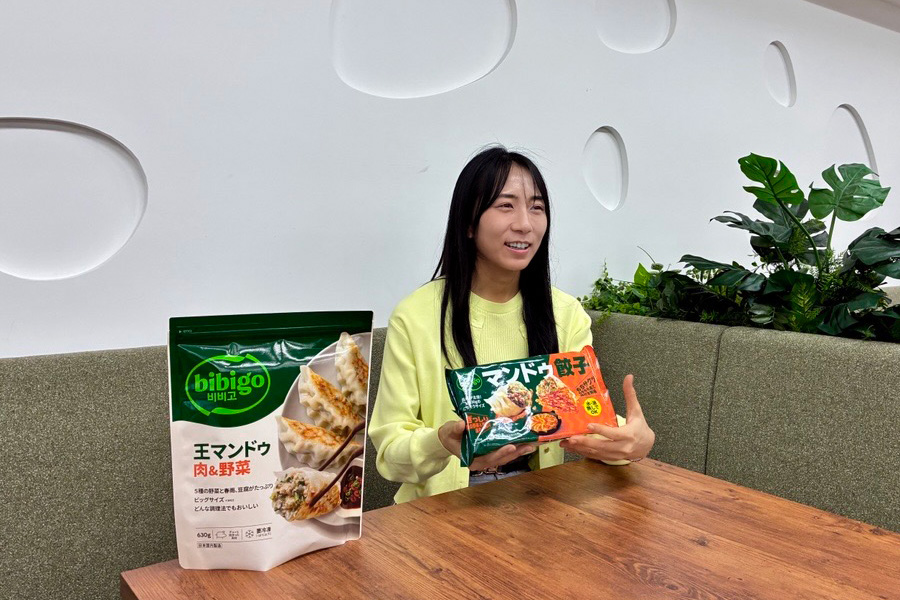
Toward the end of our conversation, we asked Ichikawa about her ultimate goal at CJ FOODS JAPAN. Her answer reflected both her sense of mission as a marketer and her affection for the brand.
“My goal is for the word ‘mandu’ to feel natural in Japan. Just as people casually think of gyoza when deciding what to have for dinner, I hope mandu becomes one of those obvious choices at the table.”
For Ichikawa, the work is about more than simply selling products. She wants to continue doing something meaningful by helping introduce and expand a new food culture in Japan. While showing respect for the country’s deeply rooted gyoza culture, she is also finding smart and effective ways to communicate the distinct appeal of Korean-style mandu. It will be exciting to see how the new history of mandu being shaped by Ichikawa and CJ FOODS JAPAN continues to transform dining tables across Japan.