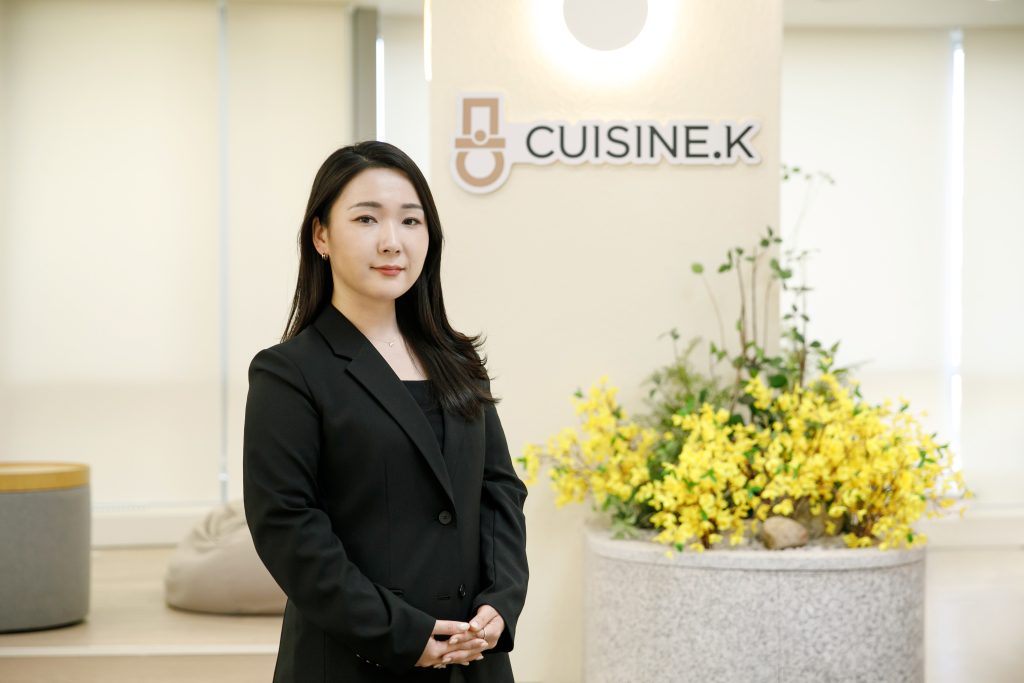
Park Shin-young, brand manager of Hansik245, spoke about the importance of Cuisine.K and its role in elevating K-food around the world
At a Glance
- What Is Cuisine.K? CJ Foods’ chef development platform for discovering and nurturing the next generation of culinary talent
- Why Chefs? Because chefs turn interest in K-food into direct experiences that build understanding, trust and everyday adoption
- How Does It Work? Through programs designed around challenge, growth and expansion — from cooking classes and pop-up restaurants to culinary competitions
- What Is the End Goal? To build a sustainable ecosystem where chefs help make Korean cuisine part of everyday life around the world
When discussing the globalization of K-food, it’s easy to first think of specific products or brands. However, behind it all are the people who bring K-food to life for everyday consumers. CJ Newsroom spoke with one such person, Park Shin-young, brand manager of CJ Foods Hansik245, who leads and operates the next-generation chef development initiative, Cuisine.K.
More than just a program, Cuisine.K is CJ Foods’ chef development platform centers chefs — those who create, interpret and deliver Korean cuisine — and expands meaningful touchpoints for experiencing Korean food. Through this conversation, we explore how nurturing chefs can shape the next stage of K-food’s global journey.
Q. How would you define Cuisine.K?
Cuisine.K is both a catalyst for the globalization of K-food and a platform for discovering and nurturing the next generation of culinary talent. Rather than simply introducing Korean cuisine, the core of the program lies in developing chefs who can interpret it with their unique style and bring it to life on the global stage. Ultimately, Cuisine.K is about supporting the people who will create meaningful touchpoints for Korean cuisine to become part of everyday life around the world.
Q. Why does Cuisine.K place chefs at the center?
K-food has grown to a stage where global consumers are now naturally exposed to it and show interest in learning more. The next challenge is to turn that interest into actual consumption and everyday choices. To that end, it’s essential to expand tangible touchpoints that consumers can directly experience — beyond just products and content. We believe chefs play a critical role at those touchpoints. Chefs aren’t simply people who cook — they’re the ones who can most vividly convey the taste, techniques and stories of K-food on the ground. As Korean cuisine evolves from awareness to everyday adoption, chefs are at the center of that transition.
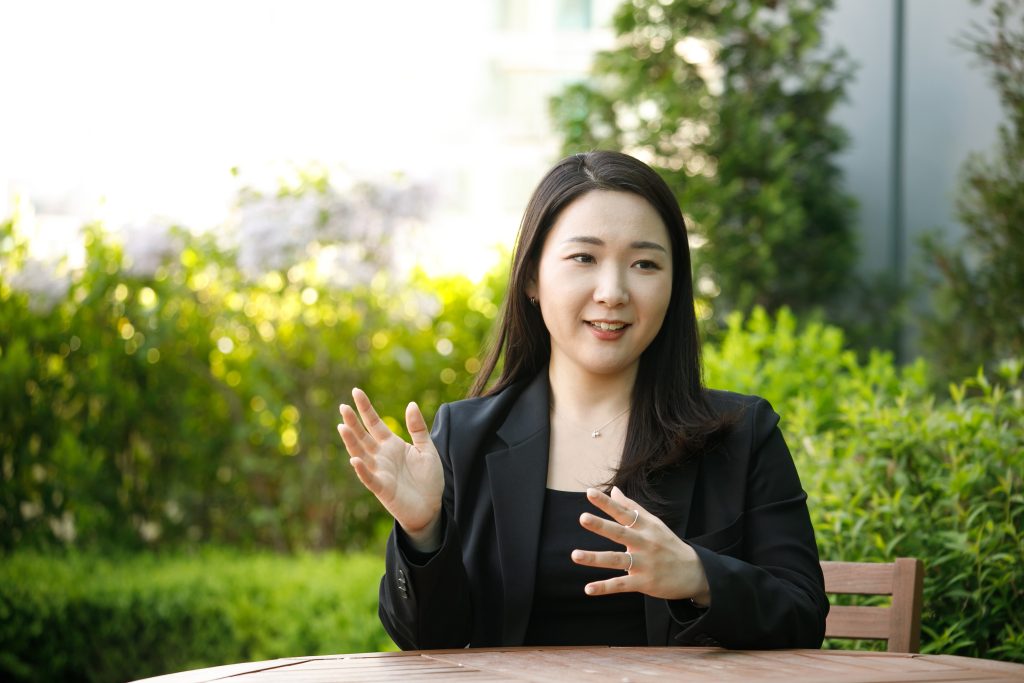
Q. Why is “chef development” considered a key pillar beyond product or brand expansion?
Because food is ultimately remembered and spread through people. While products provide the easiest way for consumers to experience Korean cuisine, it’s the chefs who enable a deeper understanding and encourage repeated engagement. We see chefs not simply as cooks but as cultural ambassadors. They’re the ones who can explain why certain ingredients are used, why specific techniques are chosen and what meaning a dish holds within Korean culture. Compared to a food company introducing products, when chefs share the culture of a cuisine in their own voice, it creates a stronger sense of curiosity and trust among audiences.
Q. How does Cuisine.K nurture chefs?
Cuisine.K believes that developing K-food talent is the most sustainable way to globalize Korean cuisine. It goes beyond teaching cooking techniques and serves as a platform that enables chefs to interpret Korean cuisine in their own style and share it with the world. Cooking classes, pop-up restaurants and culinary competitions are different program formats, but they’re all designed within an integrated framework to challenge, grow and expand. Ultimately, these programs provide a foundation for chefs to expand K-food in diverse ways. The goal isn’t just to develop individual chefs but to build an ecosystem where Korean cuisine becomes a part of everyday life for a global audience thanks to their culinary efforts.
Q. What capabilities are required for chefs to succeed on the global stage?
Strong culinary skills and hands-on experience are fundamental. However, they’re not enough on their own to expand K-food in an international context. Beyond taste, chefs need the ability to communicate the story and meaning behind the food. It’s also important to have the sensibility to reinterpret Korean cuisine while preserving its essence, even when working with local ingredients and in different environments. In addition, communication skills, a collaborative mindset across diverse cultures and the ability to adapt and execute effectively in real-world settings are all essential to remain competitive on the global stage.
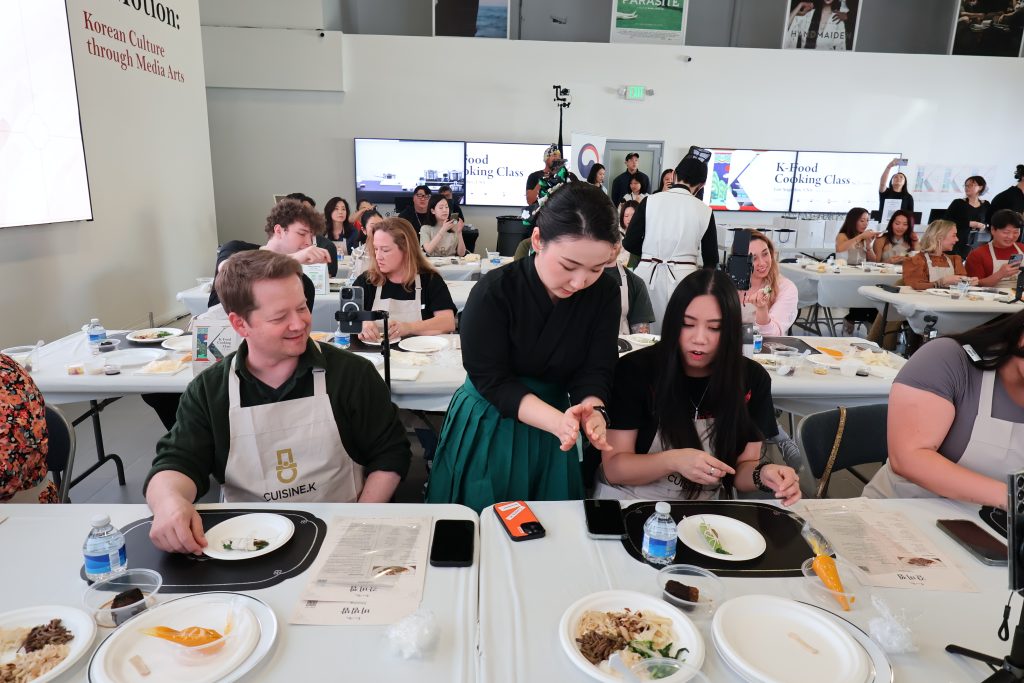
Q. Was there a particularly memorable moment from your overseas programs?
What stood out most was the process of participants coming to understand Korean food through their conversations with chefs. During last year’s cooking classes across three European countries, when we explained the preparation of galbijjim (braised beef short ribs), participants showed great interest by comparing it with French cooking techniques they were familiar with. Through this process, we could sense a shift — K-food was no longer perceived as something entirely unfamiliar but rather as a cuisine that could be interpreted in different ways. Direct interaction with chefs goes beyond a simple experience to become a meaningful driver that encourages participants to understand K-food more deeply and try cooking it themselves.
Q. Are there any noteworthy success stories among Cuisine.K chefs?
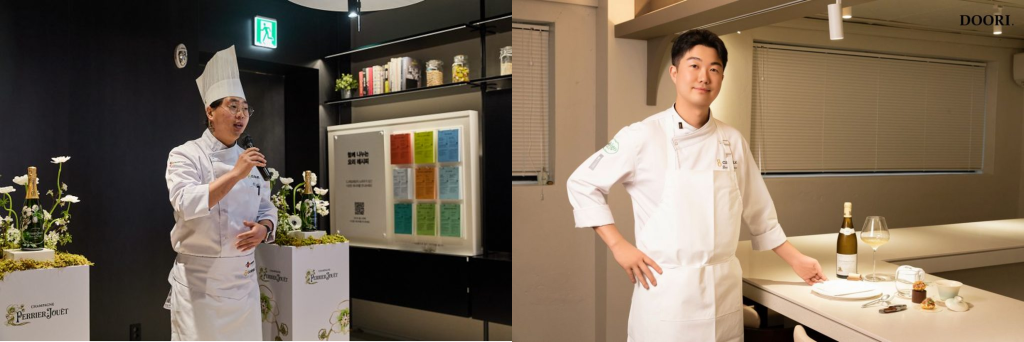
One notable example is chef Shin Yong-joon, who participated in the second pop-up restaurant program. After the program, he refined his menu and concept and was subsequently recognized by the Michelin Guide. Similarly, the team “DOORI,” which participated in the fourth pop-up program, used the program as a testbed to refine their menu and operations before opening their own restaurant, later earning a place in the Michelin Guide. These cases highlight how the Cuisine.K experience helps shape chefs’ individual directions and leads to tangible career outcomes.
Q. What kind of change do you hope to create through Cuisine.K moving forward?
The goal is for K-food to become a familiar, everyday option worldwide, not just a special culinary experience.
At the core of this vision are the people. We hope that chefs who grow through Cuisine.K will open their own restaurants around the world, create menus and content rooted in Korean cuisine and in turn nurture the next generation of chefs. At the same time, we hope to broaden access to learning Korean cuisine. Just like French or Italian cuisine, we envision a future in which studying Korean cuisine at culinary schools, cultural institutions or restaurants abroad becomes a viable pathway within the culinary education ecosystem.
Ultimately, Cuisine.K aims to evolve beyond a single program and establish itself as a leading platform, elevating the global presence of K-food while continuously expanding its reach.
Cuisine.K isn’t defined by the number of classes or the scale of its events. It’s about the people who teach Korean cuisine, bring it to life and inspire others to return to it time and again. As K-food moves beyond awareness into everyday adoption, it’s ultimately the people who make that transition possible — and Cuisine.K continues to expand that starting point, one chef at a time.