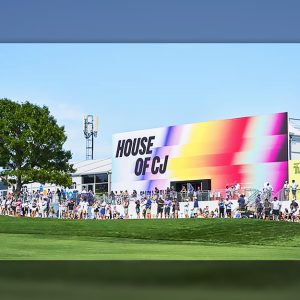
CJ Group turned a PGA TOUR event into a large-scale platform for sharing the K-lifestyle in the heart of the U.S.
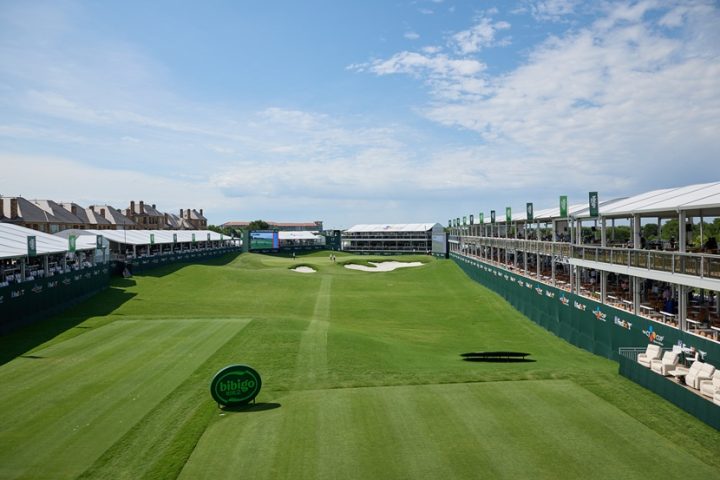
At THE CJ CUP Byron Nelson, the 17th hole serves as the tournament’s signature stage. Surrounded by stadium-style grandstands, it gives spectators a full view of the action — from the tee shot to the final putt — consistently drawing some of the biggest crowds on the course and creating one of the tournament’s most charged atmospheres.
That energy is also why many of the event’s premium VIP facilities are centered around the 17th hole. For CJ, the area is more than a prime viewing spot. It has become a central hub for business networking with major U.S. companies and local leaders — effectively functioning as the tournament’s de facto VIP salon.
On the second day of THE CJ CUP, Kim Si-woo stepped onto the 17th tee box with a five-stroke solo lead at 18-under par. Suddenly, a shout of “Wooo!” rose from the grandstands. At first, it might have sounded like home spectators trying to rattle Kim as they cheered for Texas native and defending champion Scottie Scheffler, who was playing in the same group. But the moment carried a different meaning.
As well as representing a cheer of excitement, “Wooo!” sounds like the English pronunciation of part of Kim’s name, “Si Woo.” A striking and memorable scene unfolded as American spectators chanted the ace golfer’s name in support.
CJ Group Chairman Lee Jay-hyun was present as well, seated among the spectators in the 17th-hole grandstands. Kim has worn the CJ logo on his cap for more than 13 years since turning professional in 2012. Watching the CJ-sponsored player deliver a remarkable performance, Chairman Lee added his own “Wooo!” to the cheers around him. In that moment, 13 years of admiration and genuine support blended seamlessly with the cheers of U.S. spectators.
As if answering the moment, Kim delivered. From the fringe just off the green, he sank a difficult 17-foot birdie putt. With one hole still remaining, a potential sub-60 round — which would have been only the 16th in PGA TOUR history — was suddenly within reach. That birdie made an already unforgettable moment feel even bigger.
Beyond the Gallery: Korean Hospitality Redefines VIP Networking
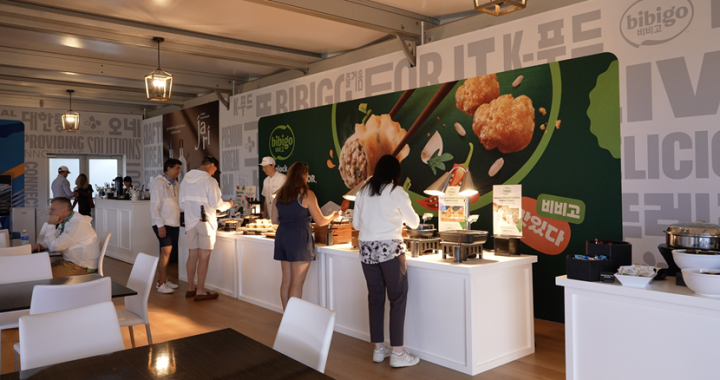
As CJ’s VIP guests entered the Hospitality Suite, they were greeted by an unexpected welcome gift: not the usual glass of wine or a cigar but an elegantly wrapped and curated OLIVE YOUNG gift set, including their best-selling K-beauty products and sheet masks. On a nearby table, bibigo had prepared a full Korean dining spread with premium dishes created in collaboration with renowned chefs, alongside K-cocktails crafted with traditional Korean spirits. In that moment, “Korean hospitality” wasn’t just a phrase but a tangible experience — something guests could hold, taste and enjoy. CJ’s Hospitality Suite is far more than a traditional VIP lounge. It functions as a high-level business setting infused with a distinctly Korean sensibility. For VIP guests, the experience extends beyond golf. It offers a glimpse into an elevated form of “K-luxury” rarely experienced in such an intimate and immersive way.
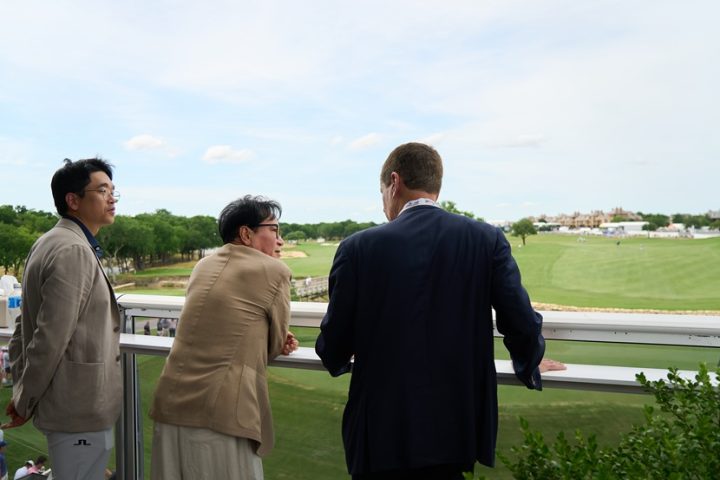
Chairman Lee also used the Hospitality Suite as a venue for global business discussions. On the third day of the tournament, Goldman Sachs Vice Chairman Robert Kaplan and Goldman Sachs Korea Head Ahn Jae-hoon visited the suite. As Kim Si-woo and Scottie Scheffler wrapped up the 18th hole just outside, the conversation turned to CJ’s global business strategy, including investment plans to expand CJ’s North American footprint as well as potential areas for future cooperation.
A Century-Old Dallas Community Embraces ‘CJ’s Way’
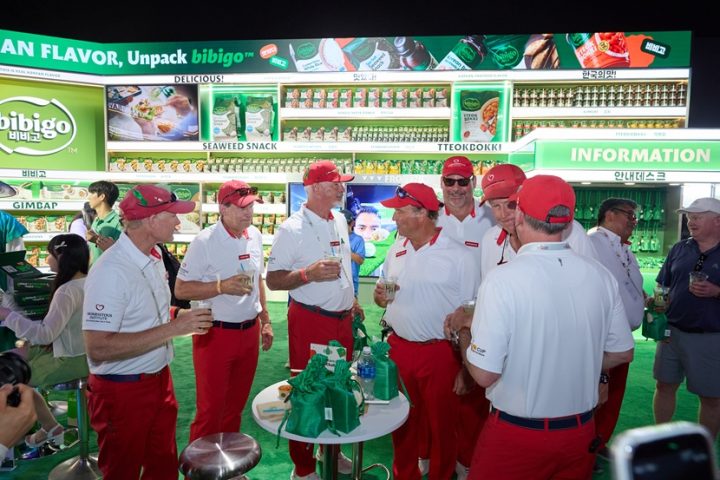
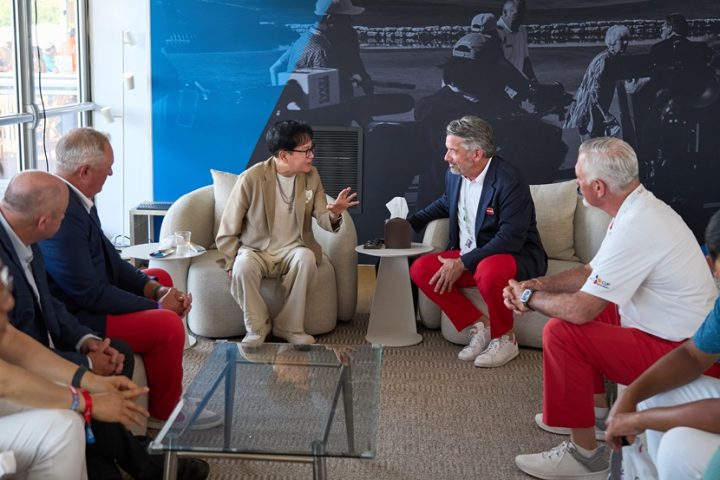
CJ Group has steadily deepened its ties with the Dallas community through its partnership with the Salesmanship Club of Dallas (SCD), the local leadership organization that has hosted the Byron Nelson tournament since 1968. With a history spanning more than 100 years, SCD is a volunteer-led nonprofit made up of roughly 600 Dallas community leaders. Through this partnership, CJ has come to be viewed not as an outside sponsor, but as a trusted presence in the local community.
“No partner has ever felt as much like family as CJ has,” shared Steve Van Amburgh, whose family has been involved with the SCD for three generations and who has personally volunteered at the tournament. “Our shared goal is to help make CJ a household name not just in Dallas but across the United States.”
During the tournament, Chairman Lee also met with SCD members to discuss ways to deepen collaboration so that THE CJ CUP can grow into “a premier festival enjoyed by the whole community.”
Those relationships are already translating into tangible business outcomes across Texas — from new TOUS les JOURS store openings to logistics collaborations with CJ Logistics. Connections first formed on the golf course have begun to take shape as long-term business partnerships.
Why Texas, Not Los Angeles or New York? CJ Plants Its Flag in the Heart of America
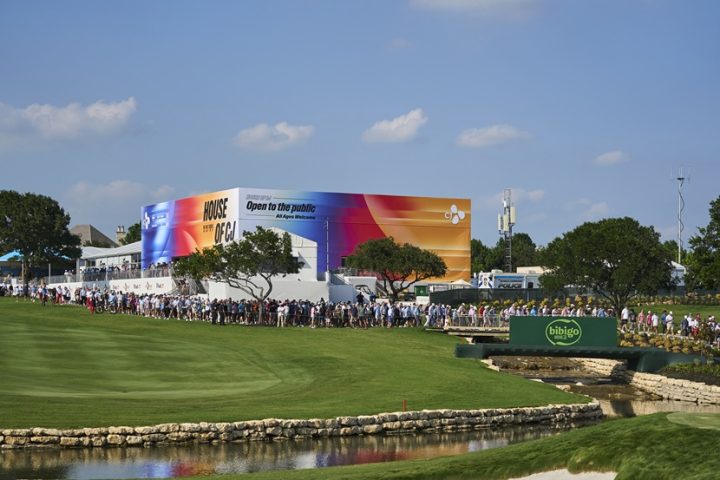
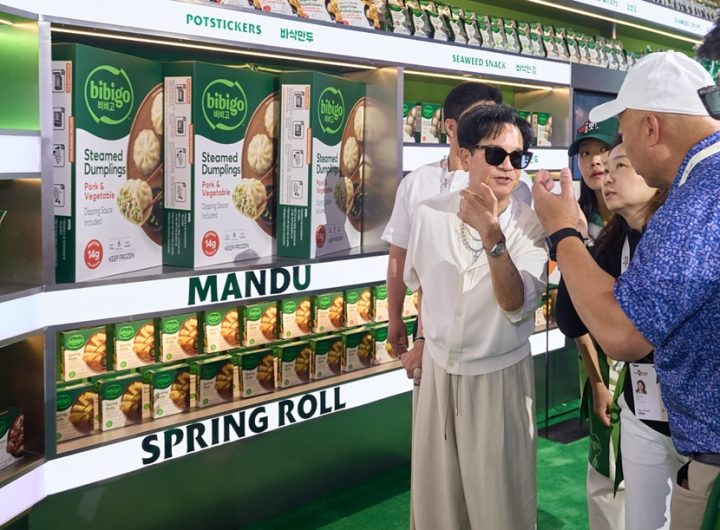
When Korean companies look to expand or market in the U.S., Los Angeles and New York are often the first destinations that come to mind. CJ, however, chose Texas as the stage for House of CJ, its integrated K-lifestyle platform. House of CJ brings K-food, K-beauty and K-content all together in one place, transforming the strengths of CJ’s businesses into a unified cultural experience. So why Texas?
The answer lies in what makes Texas such a distinctive market. Home to 32 million people, the state ranks second among U.S. states by GDP. Around Austin’s “Silicon Hills,” global companies such as Tesla and Oracle have established major operations, while fast-growing businesses and young talent continue to flow into the region. Dallas-Fort Worth, located near the tournament venue, is also one of the country’s major hubs for finance, logistics and education.
Just as important, Texas sits near the geographic heart of the U.S., with most major destinations reachable within roughly a four-hour flight. At the same time, the state also carries a deeply American identity rooted in cowboy culture and frontier history. By showcasing the K-lifestyle in the heart of America, a region with fewer touchpoints for K-culture than the West and East Coasts, CJ found an ideal stage for two goals at once: expanding the K-wave and creating global business opportunities.
Instead of focusing on consumers in Los Angeles or New York who are already familiar with K-culture, CJ is looking toward a broader base of potential consumers who have yet to experience the K-wave in full. That’s where CJ’s smart business strategy comes into focus.
🔎 Read More From Chairman Lee’s U.S. On-the-Ground Management Series
“How CJ Turns Cheers Into Business Momentum at THE CJ CUP Byron Nelson”
[CJ ON THE GROUND — THE CJ CUP] Chairman Lee’s Dreams for Golf: ‘Dream bigger, goal higher’
[CJ ON THE GROUND – Food] Chairman Lee: ‘Only One, Next One, Number One. I Like One’