This summary was generated with AI. We recommend reading the full article for accurate information.
K-Fieldbook is a column series by The Korea Herald’s No Kyung-min, offering field notes on the K-lifestyle. The third installment explores K-beauty’s health-first philosophy, how it has shaped the industry’s global success and its potential to drive growth beyond skincare.
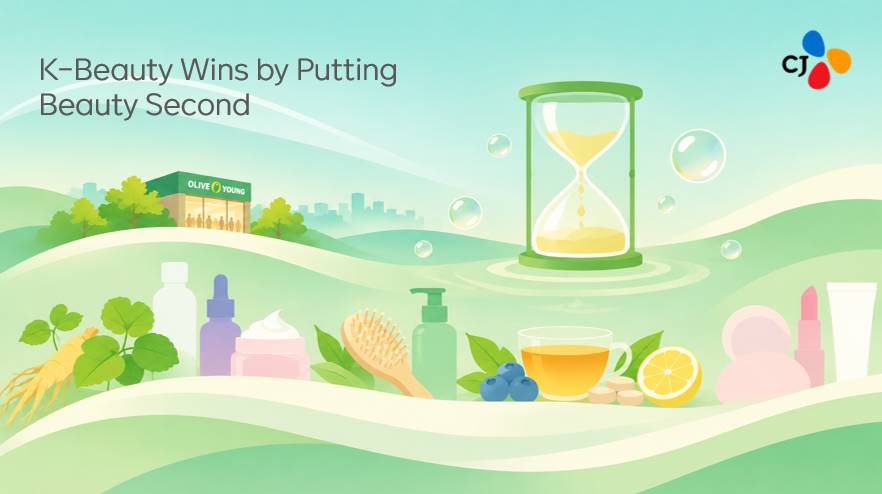
Counterintuitive though it may seem, K-beauty is not really about beauty at face value.
Trace the world’s fascination with K-beauty to its source, and you find the promise of natural, clear skin that no shortcut can deliver.
Cleansing, toning and layering serums nourish the complexion over months and years in the faith that radiance will come forth. Beauty is merely the outward manifestation of such painstaking routines and the health they cultivate in the skin and body alike.
However slow the rituals, the industry behind them has moved at a brisk pace, advancing from basic hydration to dermatologist-grade formulas and wellness supplements, so much so that it now enjoys global preeminence.
Cosmetics exports through October hit 12.4 billion USD, eclipsing last year’s record of 11.4 billion USD, according to the Ministry of Trade, Industry and Resources. Still, a face can absorb only so many steps, and every streak begs a sequel.
The Slow Art of K-Beauty
Perhaps this health-first notion of beauty descends from Confucian ideals of inner virtue and self-cultivation. It may also draw on hanbang, Korea’s centuries-old herbal medicine, which pursues balance throughout the body and inspires no shortage of brands today to use its botanicals for their purported skin benefits.
Clearer still is that today’s K-beauty belongs to the laboratory, where brands and manufacturers refine multistep routines that run the gamut from mild cleansers to barrier-strengthening formulas and daily sun protection.
In those labs the magic happens, yielding snail mucin to seal in moisture, centella to calm irritation, niacinamide to brighten a dull complexion and ginseng to ward off premature aging. PDRN, for one, which originated in dermatological treatments, was bottled into ampoules by Korean brands and has since found its way into health supplements of all kinds.
Under K-beauty’s ethos of whole-body health, active ingredients meant for healthier skin now tend the body from head to toe.
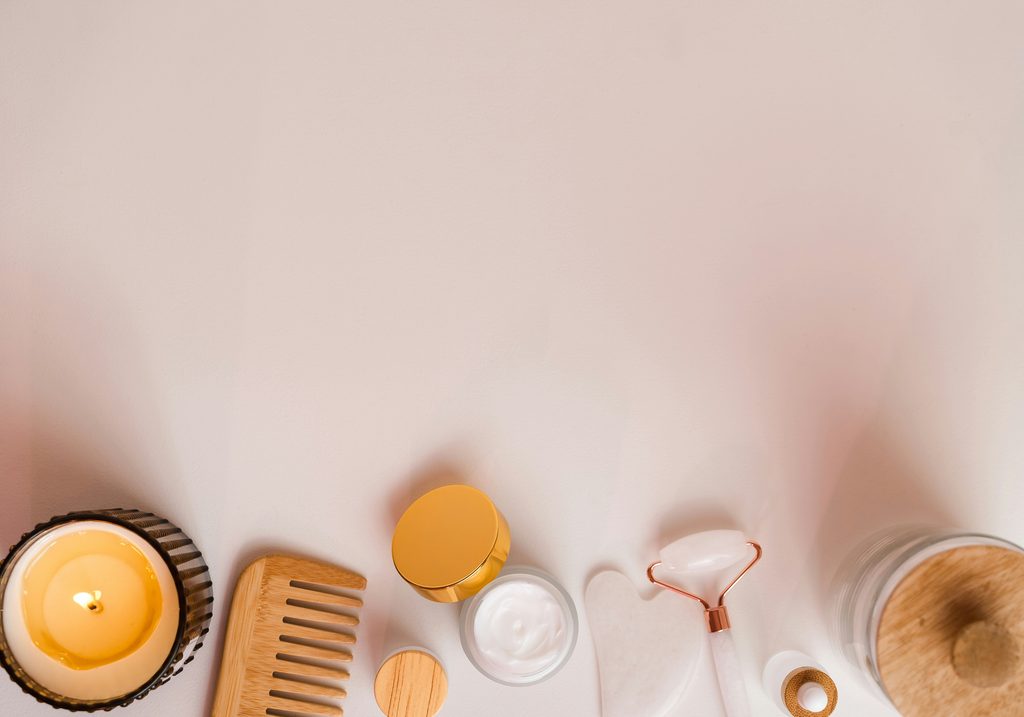
The standout is Korean haircare, which treats the scalp not merely as a backdrop for hair but as a cherished stretch of skin. The “skinification” of hair, in industry parlance, grants the scalp the same multistep regimen lavished on the face and puts its health before any hairstyle.
So where do all these pieces come together? In Korea’s ubiquitous beauty retailers, which have become quasi-clinics for whole-body health.
Consider OLIVE YOUNG, Korea’s leading beauty and lifestyle retailer with over 1,300 stores nationwide. Its skincare shelves overwhelmingly promise healthier skin, and an inner-beauty section takes up the same cause from within.
The retailer has gone a step further with Advanced Derma, a dermocosmetics line developed with domestic drugmakers and seen as milder than pharmacy-grade treatments.
OLIVE YOUNG also turns that thinking inward with OLIVE BETTER, a wellness concept store that traces the arc of a day from morning to bedtime so that every moment of eating, moving, grooming and resting brings well-being to mind.
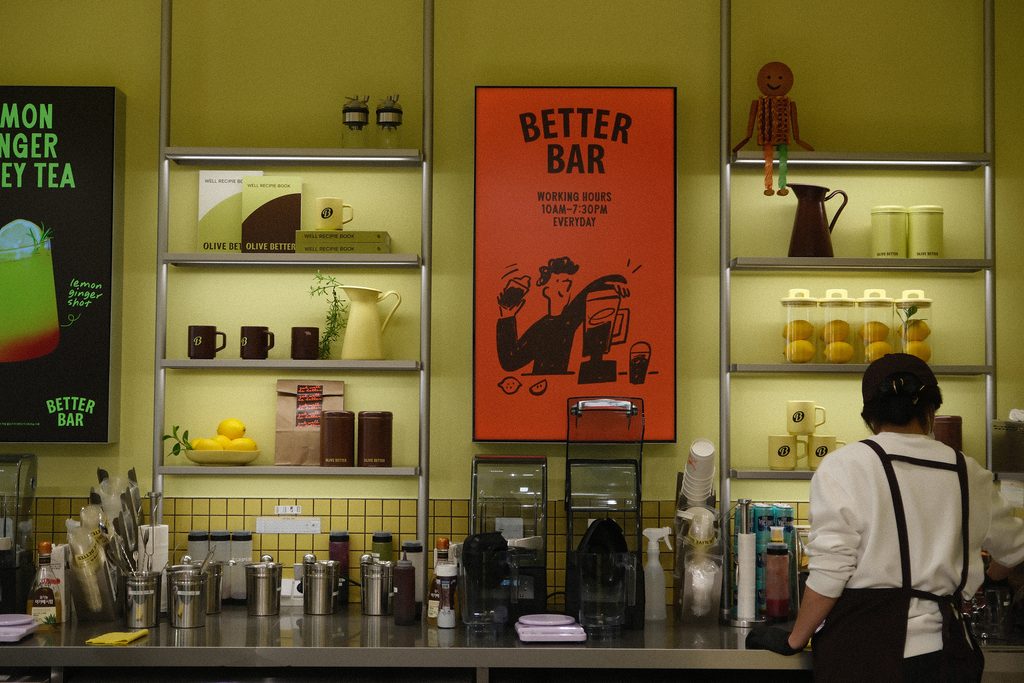
From the nation’s largest beauty retailer to the smaller chains thriving nationwide, Korea’s beauty stores have become standard-bearers of K-beauty’s long view. It is heartening to witness not only locals but also ever more foreigners visiting them and committing to the patient discipline of K-beauty in pursuit of healthier skin and, for lack of a better word, greater beauty.
The New Face of Makeup
If skincare is K-beauty’s forte, why not bring it to makeup? In a sense, it already has, ironically for an industry that shrugs at instant allure. Yet it has to prove it can thrive there.
Korea exported 1.11 billion USD in color cosmetics from January through September, about an eighth of its 8.72 billion USD in skincare. The global color cosmetics market is estimated at 105.2 billion USD this year.
The shrewdest way into that market may be the one K-beauty knows best: nurturing the skin.
On the spectrum from skincare to makeup, suncare sits near the former. Its standouts behave more like moisturizers than shields, with Round Lab, Beauty of Joseon and Aestura marrying light, hydrating formulas with tone-up and brightening ingredients.
BB cream, or blemish balm, edges a step closer to makeup, and fittingly, it began life in dermatology. Today’s formulations trade heavy textures for sheer, natural coverage laced with hydration and anti-aging benefits, and its global market is expected to more than double within a decade. Turning heads abroad, Korean BB creams now top Amazon’s US rankings.
BB creams can stand alone, but heavier makeup calls for a base that protects the skin underneath. Enter “skin prep,” another K-beauty specialty whose products hydrate, smooth and brighten the face so that whatever follows looks more natural and lasts longer.
Full-fledged makeup, too, has begun to command floor space in Korea’s beauty stores.
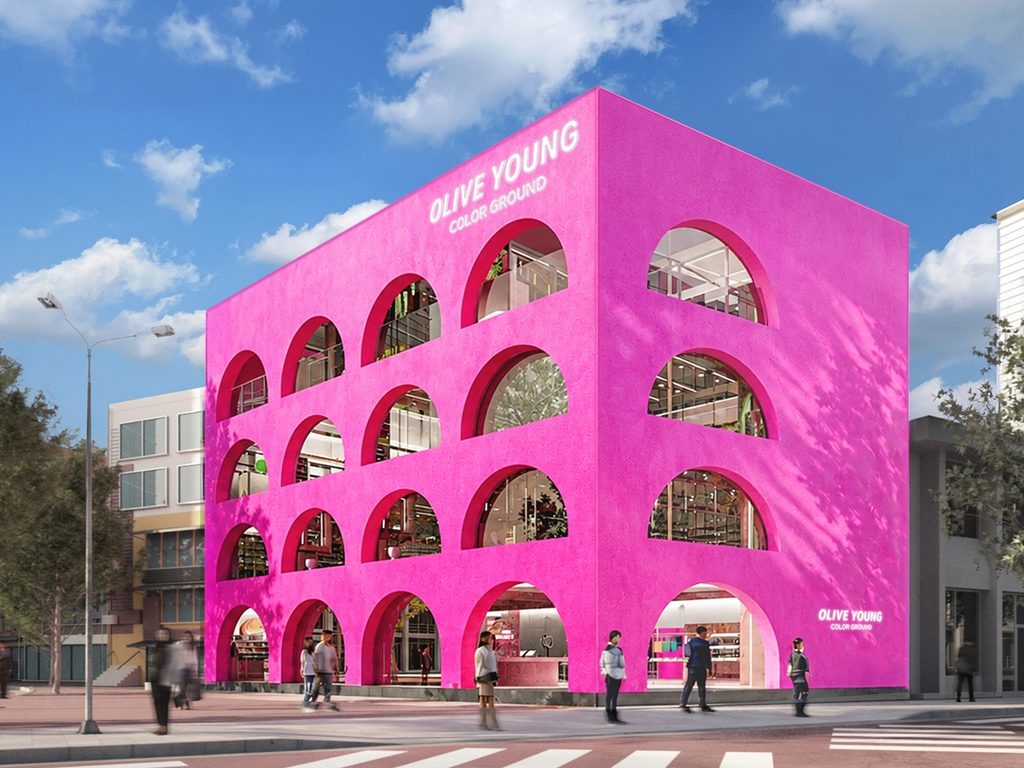
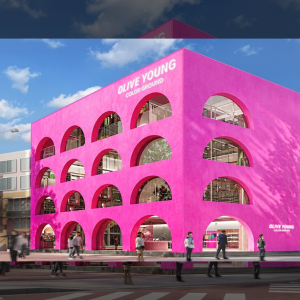
OLIVE YOUNG even forsook its signature green for hot pink in COLOR GROUND Hongdae, a four-story outpost in Mapo-gu, Seoul, given over entirely to makeup. The company envisions the store becoming a launchpad for K-makeup worldwide, with functional products including lip conditioners and lash care dissolving the line between caring for a face and doing it up.
Granted, for makeup, helping wearers achieve the look they want is one thing, and delivering that look while nourishing the skin is quite another.
Uncertain is the degree to which K-beauty can pull off both at once while the global market is still forming its judgment. Certain all the same is our longing for the glow of healthy skin that survives the makeup wipe.