At THE CJ CUP Byron Nelson, a century-old tradition meets Korean food, culture and lifestyle, creating a shared experience that now stretches far beyond the golf course
Together, it adds up to 60 years. That is how long Steve Van Amburgh (Salesmanship Club of Dallas CJ Client Services Chairman) and Dodge Carter (2025 THE CJ CUP Byron Nelson Tournament Chairman) have spent wearing red pants in Dallas. We met them separately, but they ultimately seemed to be telling the same story from two different angles: how a golf tournament became woven into the everyday life of a city.

For the two men, the red pants are not simply clothing. They are a long-standing emblem of the bond shared by the Salesmanship Club of Dallas (SCD), the Dallas-based volunteer organization they both belong to. Founded in 1920, the club now has around 600 members and is dedicated to supporting the mental health of children and families in the community. THE CJ CUP Byron Nelson, an official PGA TOUR event, is where SCD members volunteer their time and efforts to raise funds for that mission.

Heart-Marked Pants and a Century-Old Promise
Steve’s story begins with his maternal grandfather. His grandfather joined SCD in 1936, his father followed, and Steve began wearing the red pants himself in 1984. He said it almost casually, as if talking about the weather — that one family had carried the same tradition for nearly 90 years.
Dodge, who first put on the red pants 18 years ago, has, in many ways, grown up alongside the tournament. Since childhood, whenever May arrived, the tournament was always unfolding somewhere in the city. Over time, he found himself becoming part of it as well.

The red pants they wear are marked with small hearts, an emblem of the club’s mission to support the mental health of children and families. Dodge added a lighthearted observation: the pants are not exactly breathable, making them a little warm during a Texas May. It was a modest complaint, but also revealing. The casual remark showed just how naturally the red pants had become part of everyday life. When something becomes that familiar, it no longer requires a grand explanation.
This is CJ’s third year as title sponsor. Asked what had changed, Steve gave an unexpected answer. When a sponsor changes, people usually talk about what has been added. Steve spoke instead about what had been carried forward.
“What we have kept alive for so long is not golf itself. It is the work of creating one week each year when the people of Dallas gather in one place through golf. Since CJ became part of the tournament, that week no longer belongs only to Dallas. For one week, a day in Korea and a day in Dallas now meet in the same place.”
He called it the evolution of heritage. Heritage, he said, is not simply about preserving what already exists. It becomes more fully itself by embracing what is new. Coming from someone whose family has worn the red pants for nearly a century, it felt like the clearest expression of what “heritage” truly means.

CJ Arrives at the Table, the Vanity and the Living Room
Dodge described the same change through a different set of scenes. Last year, Korean chefs prepared and served dishes at a booth during the tournament. He said his favorite was Mandu. At first, he called them dumplings, but after hearing the word “Mandu,” he repeated it back. “Mandu, I really love Mandu.” The fact that he chose to try the unfamiliar word, rather than stay with the one he already knew, felt like its own expression of affection for bibigo.
From food, Dodge’s story turned toward family. After visiting Korea last year, he brought home plenty of cosmetics from OLIVE YOUNG for his wife, who quickly became a fan. He also gave some to his daughter-in-law, and everyone loved them. “I just know CJ. I don’t really know the beauty brands. My wife knows them very well.” The way he smiled, a little sheepishly, unable to name the brands exactly, felt like a small sign that something from Korea had already found its place in his home.
When he began talking about his six-year-old granddaughter, Elsie, his expression softened. She dances along to Korean singers on screen in the living room, he said. His grandchildren also make a point of wearing the merchandise clothing he brought back from Korea. Whenever they visit their grandfather’s house, they make sure to wear those outfits, he added with a laugh.
A six-year-old child dancing to Korean songs in a Texas living room. In moments like that, phrases such as “the spread of K-culture” suddenly feel too broad and abstract. The word “spread” is expansive, while a living room is deeply personal. As the conversation continued, Dodge seemed to arrive at his own conclusion, summing it up in a single word: lifestyle.

Come for Golf, Live a Day in Korea
“Everyone has their own lifestyle. CJ introduces people to a different lifestyle experience they can make their own. This tournament brings a day in Korea together in one place, with food, cosmetics, bakeries and more. People come to watch golf and end up experiencing a day in Korea.”
The idea of coming to watch golf and living a day in Korea stayed with me. It felt like the clearest summary of where this tournament is headed. No one would describe it as a billboard. Yet over the next four days, hundreds of thousands of people will walk these grounds, and on their way home, many will carry with them memories of Korea’s flavors, lifestyle and K-pop. That experience returns here every May.
K-Lifestyle Walks Into Everyday Life
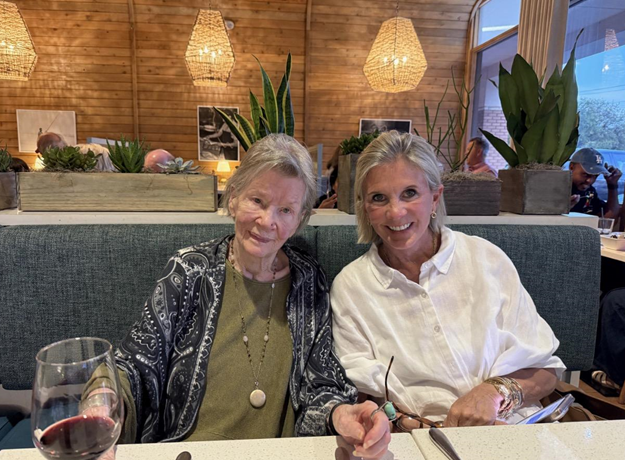
Steve’s mother is 98 this year. When the interview came up over a family meal, she said she wanted to come too. Steve said he planned to bring her later in the tournament week. The red pants carried across nearly 90 years, and a 98-year-old mother hoping to see THE CJ CUP once more. At that point, the story no longer felt solely about a golf tournament. It became a story about a century of shared time carried by a city, and about a day in Korea quietly finding its place within it.
When asked what the tournament meant to him, Steve paused for a long moment before saying he would be able to answer more clearly after this week was over. For now, he said, he was still discovering the answer here, on the course. Then he added one more thought.
“There are things we have carried forward for a long time, and things CJ has brought in. The hardest thing is for the old and the new to stand together without pushing each other aside. At this tournament, that happens.”
As the sun dipped lower, Steve returned to his post. On his way, he pointed toward a striking structure beside the 18th hole: House of CJ. On grounds shaped by a century of tradition, a house from Korea stood quietly. The old and the new were waiting for the morning together, without pushing each other aside. When its doors opened, the lifestyle both men had described in their own ways would begin to reveal itself on the faces of the people walking through.
⛳ Catch Up on THE CJ CUP Stories
DAY 1
[THE CJ CUP ESSAY] From Korea to Texas: K-Food Shines at THE CJ CUP
[THE CJ CUP MOMENT] One Rainy Afternoon, K-Food Found a Home in Texas
DAY 2
[THE CJ CUP ESSAY] Under the Texas Sun, K-Beauty Finds Its Place
[THE CJ CUP MOMENT] On a Pin-Covered Lanyard, Dedication Becomes Heritage
DAY 3
[THE CJ CUP ESSAY] Playful Energy Finds Its Place in Golf’s Quiet Moments
[THE CJ CUP MOMENT] Two Names, Side by Side on the Fairway
DAY 4
[THE CJ CUP ESSAY] More Than Golf, A Weekend of K-Lifestyle
[THE CJ CUP MOMENT] Through the Viewfinder, K-Lifestyle Comes Into Focus